


China’s one-child policy and gendercide has brought about a severe gender imbalance in China.
Even though China now allows families to have two children, the current reality is that there are now 34 million more men than women in China. That’s roughly the entire population of Malaysia.
Related Campaign: Join the fight against forced child marriage.
For many Chinese men, particularly from rural or working class backgrounds, this gender imbalance means finding a wife in China is simply not possible.
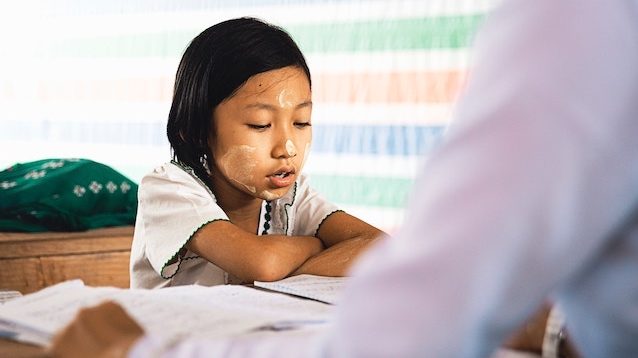
As a result, men in China are looking to Southeast Asia — especially neighboring Myanmar — to find wives. But it’s also opened up a new market in which Myanmar girls are sold into forced marriages with Chinese men.
More often than not their traffickers are their own parents.
In an article for Thomson Reuters Foundation, Aidan McQuade from Livelihoods and Food Security Fund explains:
In 2018, in conversations with internally displaced people and community-based organisations in Kachin State that borders China, I was told that the most popular age of girls for the China market was 13 to 16 years. These girls typically fetch between USD 2,000-USD 3,000 for “three years and a baby”.
After a girl has stayed with a Chinese man for three years and delivered a child, she may then be sold on to other men in China for similar usage.
Community groups in Kachin State suggest that impoverished families living in camps for internally displaced people sell their own daughters to traffickers.
In Myanmar, the girls being sold into slavery are not foreign to the traffickers. Rather they are their own or their neighbours’ daughters, frequently deceived with a false promise of decent work to temporarily conceal the truth that they are being traded like livestock.
According to research from the Freedom Fund, the most vulnerable girls are lured to China with promises of education.
As McQuade argues, interventions to prevent forced marriage must focus on keeping girls in secondary school in Myanmar and job opportunities post-schooling so that they can work their way out of poverty.
“It is a modest response to a major problem. But it has the potential to grow as women develop new businesses and repudiate the ideals that currently reduce them to commodities rather than citizens in their own country,” says McQuade.




Freedom United is interested in hearing from our community and welcomes relevant, informed comments, advice, and insights that advance the conversation around our campaigns and advocacy. We value inclusivity and respect within our community. To be approved, your comments should be civil.
A few things we do not tolerate: comments that promote discrimination, prejudice, racism, or xenophobia, as well as personal attacks or profanity. We screen submissions in order to create a space where the entire Freedom United community feels safe to express and exchange thoughtful opinions.