


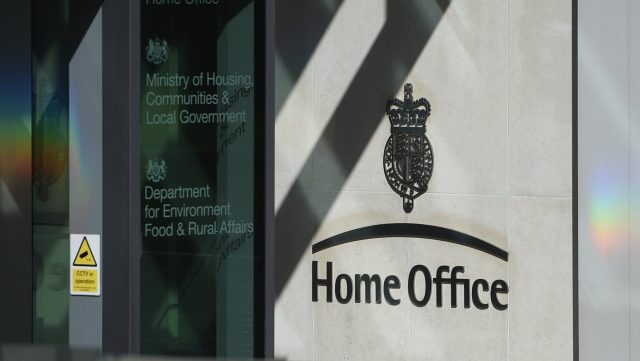
The UK Home Office has agreed to recognize the financial exploitation of migrant workers as modern slavery, following a legal challenge by a Pakistani care worker. Once the change takes effect, migrant workers trapped in debt by fake job offers will be able to seek support as potential survivors.
However, the decision comes as the Government pushes immigration reforms that could leave many survivors without the protection they need to recover.
“I felt like my whole life had just started to cave in.”
Ali* arrived in the UK with his family in October 2023, expecting to start work in a care home. A friend had introduced him to an agent who charged £22,000 for the role, money Ali had borrowed from relatives back home. However, he came to realize that the job did not exist.
Speaking to The Guardian, Ali described the moment he realized what had happened:
“At that moment I felt like my whole life had just started to cave in. We had invested everything we had and got into very heavy debts on the basis of this care worker job. I feel trapped by my debts and my family’s needs.”
He turned to the National Referral Mechanism (NRM), the UK’s system for identifying survivors of modern slavery, but officials said he did not qualify. With support from the Work Rights Centre and Central England Law Centre, Ali challenged that decision in court.
Eventually, the Home Office backed down, admitting in a court order that it had “adopted an unduly narrow approach to the concept of exploitation.” It agreed to recognize financial exploitation as modern slavery and human trafficking, strengthening the case for others in Ali’s position. The case has brought renewed attention to the financial exploitation of migrant workers, particularly those who pay large recruitment fees for jobs that do not exist.
Luke Piper from Work Rights Centre told the Guardian:
“There is a worrying disconnect between those experiencing modern slavery and those getting help.”
A system that doubts survivors
The disconnect reaches beyond migrant workers. Christopher, a British man, accepted a job offer from a friend. Instead, he was forced by his exploiters to work unpaid beneath a London food court. Like Ali, he needed the NRM to accept his account before he could get support. The NRM sets a high bar of “objective evidence” required for modern slavery recognition.
The UK’s new Immigration and Asylum Bill would make that harder. It proposes credibility tests that would count delayed disclosure, inconsistent accounts and similarities between cases against survivors, even though trauma commonly causes all three.
UK Independent Anti-Slavery Commissioner Eleanor Lyons warns this could even shut out survivors of former Harrods owner Mohamed Al Fayed. Hundreds of women have accused Al Fayed, who died in 2023, of rape, sexual assault and trafficking. Many only spoke out years later, which is exactly what the new tests would count against them.
Hear survivors, support survivors
The Government is also trying to speed up removals as part of the reforms. Mahmood has tabled an amendment to scrap the five-working-day notice period. It would apply to people who have exhausted their asylum or immigration appeals. Officials could then detain and remove them without warning for up to six months.
This could leave migrant workers who have experienced financial exploitation facing removal before they ever get the chance to seek help or legal advice.
Ali had to go to court before anyone listened. No survivor should have to.
Join the Hear Survivors, Support Survivors campaign. Call on UK Parliamentarians to end the culture of disbelief that puts survivors at risk of re-exploitation.
*Not his real name.



Freedom United is interested in hearing from our community and welcomes relevant, informed comments, advice, and insights that advance the conversation around our campaigns and advocacy. We value inclusivity and respect within our community. To be approved, your comments should be civil.
A few things we do not tolerate: comments that promote discrimination, prejudice, racism, or xenophobia, as well as personal attacks or profanity. We screen submissions in order to create a space where the entire Freedom United community feels safe to express and exchange thoughtful opinions.