


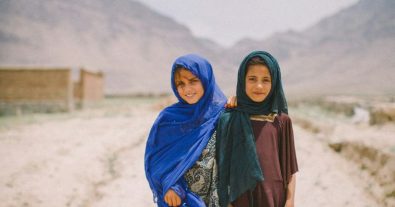
The recent decree issued by Afghanistan’s Taliban rulers is making it almost impossible for women and girls to escape forced, unwanted, or abusive marriages.
While the decree outlines 12 circumstances under which a marriage can be dissolved, Afghani women and girls say the rules leave ultimate power in the hands of men, judges, and family members- trapping women and girls in exploitation and modern slavery with no way out.
Decree tightens control over women’s lives
Before the Taliban returned to power, women seeking divorce from abusive, violent, or absent husbands already faced significant legal obstacles. However, limited avenues for separation still existed. Now those options are fast disappearing.
Fatima, a young woman from northern Afghanistan, was forced into an arranged marriage in 2024. Her family says they only discovered on her wedding day that her husband had severe intellectual and physical disabilities and required constant care. Overwhelmed by the situation, Fatima repeatedly begged her parents to help her leave.
In late 2025, her family took her case to court. However, after a brief hearing, the judge ordered her to return to her husband’s family. Two Taliban soldiers pointed their weapons at Fatima’s parents. Her in-laws then seized her and dragged her toward their car by force.
Her father shared:
My daughter was screaming and crying that she did not want to go with them, but nobody listened.
Tragically Fatima was forced to remain in the marriage and face continuing abuse.
Fatima’s relatives who were able to briefly meet with her since the court case said her in laws beat her regularly and threatened to have her parents arrested if they tried to file for divorce again.
No escape without the husband’s consent
Shockingly, the decree also explicitly allows children to be married off by male relatives. And while girls may later ask a court to annul a marriage in limited circumstances, in reality, the legal barriers for girls trying to get out are nearly impossible to overcome.
Part of the code that addresses abusive or neglectful husbands allows a wife to petition the court if her husband is unjust or withholds financial support. But the same article states that judges and arbiters “cannot, solely on the woman’s request and without the husband’s consent, grant divorce”.
Even engaged girls have no options. Ruqya was just 16 when her family accepted a marriage proposal from a much older relative. She repeatedly objected to the marriage, but her wishes were ignored. When her family later tried to end the engagement, the groom’s family demanded 800,000 Afghanis (about $12,000).
To raise the money, Ruqya’s family sold their home and arranged another marriage involving her younger sister. Even then, they still could not pay the full amount and Ruqya had to marry him and carry the guilt of her family’s loss.
“When I look at my mother and father, I feel like I destroyed them,” Ruqya says. “My mother says: ‘If you had accepted [your marriage], at least we would still have our house.’”
Survivors left with few paths to safety
The decree effectively strips women of any meaningful access to justice while reinforcing systems that enables forced marriage, child marriage, and domestic abuse.
For survivors like Fatima, the real-world consequences of the decree have been devastating. Months after being forced back to her husband’s home, Fatima’s father says she appeared physically and emotionally broken.
She held me tightly and begged me to take her with me, [but] my hands are tied, I don’t know how to save my daughter from that situation. She has become very weak, and I am afraid something worse may happen to her.
Another survivor, Habiba, spent four years trying to escape a violent marriage. But the court ordered her to return home unless she could pay a huge financial settlement.
Habiba stated:
I am still here; I am waiting for this government to fall, or for money to appear. One of those two.
Add your voice to ours and stand up to repressive laws forcing children and women to stay in abusive situations around the world.





Freedom United is interested in hearing from our community and welcomes relevant, informed comments, advice, and insights that advance the conversation around our campaigns and advocacy. We value inclusivity and respect within our community. To be approved, your comments should be civil.