


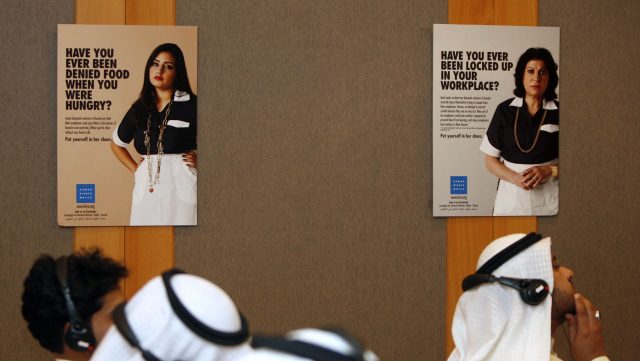
Kuwait has expelled the Philippines ambassador and recalled its own envoy from the Philippines as the diplomatic rift between the two countries over the abuse of Filipina domestic workers widens.
The oil-rich Gulf nation has long been dependant on the 260,000 migrant Filipino workers in the country, but reports of severe abuse and the horrifying murder of a Filipina whose body was stuffed into a freezer by her employers prompted a migration ban by the Philippine government.
The two nations had hoped to negotiate an end to this ban, but this week the arrests of two Filipinos associated with the embassy — who allegedly convinced abused domestic workers to flee their employers’ homes — and comments from Philippines Ambassador Renato Villa proved too much for Kuwait to bear.
TIME reports that Villa is likely being expelled for saying the embassy would step in to help domestic workers when Kuwaiti authorities do not:
Local media earlier quoted Villa as saying his embassy moves in to help abused maids if Kuwaiti authorities fail to respond within 24 hours. Online video later surfaced purportedly showing a Filipino from the embassy helping one maid flee.
He offered a public apology Tuesday over those remarks, as did the Philippines foreign minister over the comments. Two Filipinos associated with the embassy also were arrested this weekend for allegedly encouraging maids to flee their employers’ homes, Kuwaiti police said.
“Expelling the ambassador of the Philippines is a correct measure that should have been taken when the Philippines president first started his threats,” conservative Kuwaiti lawmaker Shuaib al-Muwaizri wrote on Twitter. “The Ministry of Foreign Affairs should not accept any offers made by the Philippines president or his foreign affairs secretary.”
Prior to this latest development, Philippine officials had been negotiating better protections for its workers in Kuwait, including the right for domestic workers to hold onto their passports and cellphones — two things many Kuwaiti employers are known to seize.
Some observers believe the two sides will eventually reach an agreement, especially as the Muslim holy fasting month of Ramadan begins next month. Kuwaiti employers often rely on their Filipina domestic workers during the fasting period.
Kristin Diwan, an expert on Kuwait and a senior resident scholar at the Arab Gulf States Institute in Washington says this case is a “clash of rising nationalisms” — “the tough-guy Philippine president defending his people abroad and Kuwait resenting the insolence of a subordinate.”
“The expulsion of the ambassador is a hardball tactic on the part of Kuwait, which hopefully will lead to a negotiated settlement. Both countries ultimately benefit from this relationship,” she said.





Freedom United is interested in hearing from our community and welcomes relevant, informed comments, advice, and insights that advance the conversation around our campaigns and advocacy. We value inclusivity and respect within our community. To be approved, your comments should be civil.
A few things we do not tolerate: comments that promote discrimination, prejudice, racism, or xenophobia, as well as personal attacks or profanity. We screen submissions in order to create a space where the entire Freedom United community feels safe to express and exchange thoughtful opinions.