


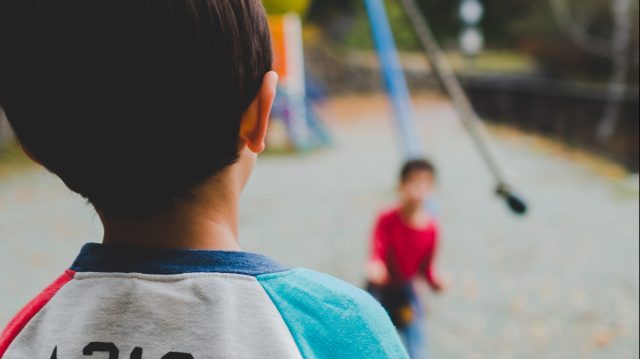
As a child, Tom Jones was raped and sold for sexual exploitation. It wasn’t until he was 15 that the brutality ended.
But, like many male victims of sex trafficking, he kept the pain inside, carrying his trauma for another 15 years before he opened up about his abuse and two suicide attempts.
And it’s precisely because sex trafficking is seen as only a women’s issue that male victims find it hard to find help, let alone have someone believe their story. In an ECPAT-USA report, one interviewee noted that law enforcement tends to treat these cases with suspicion. While filing a trafficking report, an officer even asked “Why couldn’t he get away? He’s a boy.”
USA Today reports that societal perceptions of sex trafficking fuel the stigma attached to male victims:
“Boys hear that it only happens to girls,” Steven Procopio, clinical director of MaleSurvivor, a network of therapists and survivors, says. “This is seen as a gender-biased, gender-specific issue.”
“Boys don’t fit the popular script of who is and isn’t a victim of trafficking. Liam Neeson didn’t bust through doors in the Taken movies to rescue his son. Journalists seldom write heartbreaking stories about 15-year-old boys sold on Backpage.
The reluctance to speak up is understandable, but it carries damaging consequences. Victims feel even more isolated. Government agencies and nonprofits are reluctant to provide services for an invisible population. Police, teachers and others in regular contact with youth don’t receive training in how to identify and help male victims.
Procopio and others also point to another bias — discrimination against gay males and transgender people — that prevent boys and transgender victims from being seen as victims who deserve help. “There’s a lot of homophobia. But this issue is not about sexual orientation,” Procopio says. “Trafficking is about power and control.”
Anti-trafficking non-profit Polaris Project explains that gay and transgender youth are more at risk of being trafficked because family conflicts push many to run away from home. On the streets, runaway kids — no matter their gender or sexual orientation — are highly vulnerable to abuse.
Tom Jones now works to help other men who are survivors of trafficking for sexual exploitation, but he says it hasn’t been easy. Many of the men are still reluctant to speak to counselors and most do not want to talk face to face. “They haven’t told even their families what they’ve been through,” Jones says.




Freedom United is interested in hearing from our community and welcomes relevant, informed comments, advice, and insights that advance the conversation around our campaigns and advocacy. We value inclusivity and respect within our community. To be approved, your comments should be civil.
A few things we do not tolerate: comments that promote discrimination, prejudice, racism, or xenophobia, as well as personal attacks or profanity. We screen submissions in order to create a space where the entire Freedom United community feels safe to express and exchange thoughtful opinions.