


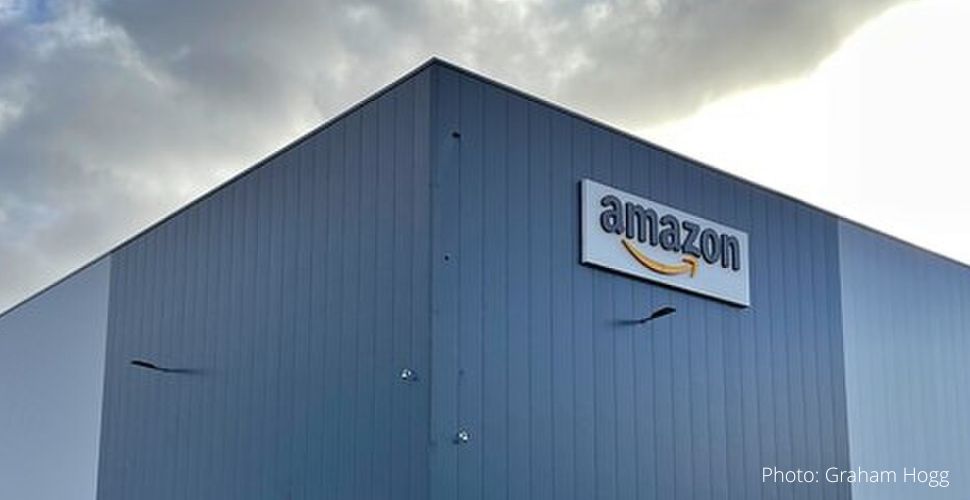
Amazon warehouse workers in Saudi Arabia continue to face exploitation, despite measures the company introduced to improve their conditions. A new briefing found that the third-party labor suppliers employing them still withhold wages and block some workers from leaving the country.
The briefing focuses on Amazon’s reliance on these suppliers, which control workers’ pay and legal status even after Amazon ends their placements.
Outsourced workforce leaves workers stranded
The investigation draws on interviews with 24 migrant workers from India and Nepal. Three labor supply companies placed them at an Amazon warehouse in Riyadh.
Many of the workers believed Amazon would employ them directly on two-year contracts. Shortly before leaving home, they learned that a third-party company would employ them instead. Under this arrangement, Amazon decides who works in its warehouse, while the supplier pays wages and sponsors the worker’s visa. Almost all of the workers interviewed said Amazon could end their assignment at any time.
Amnesty International reports that Prakash, from Nepal, said:
“Almost all interviewed workers said that Amazon could end their assignment at the warehouse at any time, a process which many referred to as being “fired” or “terminated”. Workers then remained tied to the labour supplier sponsoring their visa, leaving them in profoundly insecure situations and vulnerable to exploitation.“
When a placement ends, the worker still depends on the supplier for income and the right to stay in the country. When Amazon dropped Ayaan a year into his contract, his supplier stopped paying him for three months. Ravi’s supplier demanded two months’ salary before it would process his exit visa.
Inside the warehouse, workers described intense pressure to meet productivity targets, constant monitoring and threats of dismissal.
Amazon is not doing enough
Saudi Arabia’s kafala sponsorship system ties a migrant worker’s residency to their sponsor, who controls whether they can change jobs or leave the country. Because labor suppliers act as sponsors, they hold this power over Amazon warehouse workers.
Since Amnesty’s 2023 investigation, Amazon has improved accommodation and grievance mechanisms. It has also reimbursed more than $2.45 million in recruitment fees to 1,180 workers. Amazon told Amnesty it has strengthened supplier audits and requires suppliers to pay outstanding wages and cover repatriation costs where needed.
Amnesty International’s Marta Schaaf said:
“Despite steps taken by Amazon to improve some conditions for workers and reimburse illegal recruitment costs, its outsourcing of the recruitment and employment of migrant workers for its warehouses continues to leave such workers dependent on labour supply companies for their income, legal status and ability to change jobs or leave the country.”
Amnesty is calling on Amazon to employ warehouse workers directly and on Saudi authorities to fully dismantle kafala.
Exploitation across Amazon’s supply chain
Last year a separate investigation by Labour Behind the Label discovered workers across three factories Pakistan being paid below the required local minimum wage. Most barely scraping by with just enough to feed and house their family.
Amazon’s suppliers have also been linked to China’s Uyghur Region where Uyghurs and other ethnic, cultural, and religious groups are detained and forced to work by the state.
The company has still not yet published a full list of its suppliers or taken adequate steps to verify labor conditions.
Meanwhile, Amazon’s billionaire CEO Jeff Bezos, who can afford a $50M wedding, seems to have turned a blind eye to what’s happening in his company’s supply chain. Add your voice to the call putting an end to billionaires profiting from forced labor.





Freedom United is interested in hearing from our community and welcomes relevant, informed comments, advice, and insights that advance the conversation around our campaigns and advocacy. We value inclusivity and respect within our community. To be approved, your comments should be civil.
A few things we do not tolerate: comments that promote discrimination, prejudice, racism, or xenophobia, as well as personal attacks or profanity. We screen submissions in order to create a space where the entire Freedom United community feels safe to express and exchange thoughtful opinions.