


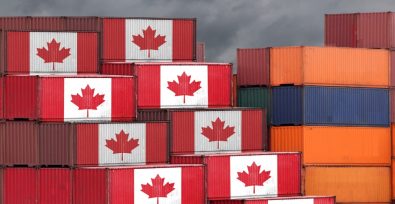
Canada has introduced legislation that would make it easier to identify and stop products linked to forced labor from entering the country. The proposed law would create a public list of high-risk products and regions. This require importers to demonstrate that goods from those areas were not made with forced labor.
While advocates welcome the move, many say stronger enforcement and broader corporate accountability measures are still needed to address longstanding gaps in Canada’s response to forced labor.
New bill shifts responsibility to importers
The Canadian government tabled Bill C-35 on Friday, proposing a new approach to preventing products linked to forced labor from entering the country.
According to parliamentary secretary Rob Oliphant, the legislation would establish a public list of products associated with forced labor concerns in specific regions. Importers bringing in those goods would be required to prove they were not produced using forced labor.
The CBC reports:
“We do not want dumping of cheaper materials, cheaper goods, into Canada that are produced with forced labour,” Oliphant said.
The proposed changes would also provide border officials with clearer guidance on which products warrant closer inspection. Currently, the Canada Border Services Agency (CBSA) relies largely on risk assessments and random inspections when screening imports.
Oliphant said the legislation would “shift the burden” onto importers to demonstrate that products from identified regions were not made with forced labor.
He also insists that, “This will be a made-in-Canada solution to an international problem” that is not a response to the new threats of tariffs from the US. US tariffs will target countries viewed as having weak policies on forced labor products and Canada is on that list.
Concerns over enforcement remain
While the bill has received support across party lines, critics argue the government has been slow to address enforcement shortcomings.
Conservative foreign affairs critic Michael Chong described the legislation as “a step in the right direction.” But added that, “[I]t shouldn’t have taken the government five-and-a-half years to get to this point.”
Canada formally prohibited imports made with forced labor in 2020 under the Canada-United States-Mexico Agreement. Since then, however, advocates have repeatedly raised concerns about limited enforcement.
Beyond transparency toward prevention
The debate around Bill C-35 comes as advocates continue calling for stronger measures that go beyond import controls and reporting requirements.
Canada adopted the Fighting Against Forced Labour and Child Labour in Supply Chains Act in 2023, requiring many companies to report on efforts to address forced labor risks. However, campaigners have argued that transparency measures alone do not guarantee meaningful action.
Many are urging Canada to adopt mandatory human rights due diligence laws that would require companies to actively identify, prevent, and address labor abuses throughout their supply chains.
Additionally, Canada is eliminating the Canadian Ombudsperson for Responsible Enterprise, a watchdog for Canadian companies operating abroad. This development is concerning to advocates.
Help strengthen corporate accountability
Preventing forced labor requires more than identifying problematic products after they reach the border. Governments must also ensure that companies take meaningful steps to prevent labor abuses from occurring in the first place.
Freedom United is campaigning for stronger laws requiring companies to take responsibility for preventing human rights abuses, including forced labor, throughout their operations and supply chains. Add your name to the call.




Freedom United is interested in hearing from our community and welcomes relevant, informed comments, advice, and insights that advance the conversation around our campaigns and advocacy. We value inclusivity and respect within our community. To be approved, your comments should be civil.