


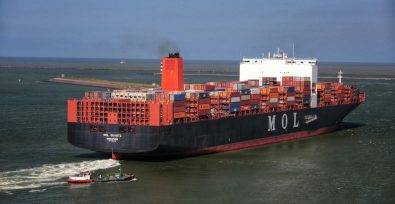
For the first time, Germany has raised its maritime security alert level off Libya’s coast, particularly along migration routes, flagging security threats affecting commercial and civilian navigation. The danger? The Libyan coast guard.
Advocates say the official recognition of the violence and danger along this route is not only too late but also hypocritical. Civilian rescue organizations have been documenting the violence facing migrants in the Mediterranean Sea for years. Further, Germany and the EU continue to fund the “aggressors” Germany is now warning commercial vessels of.
Too little, too late
German authorities are warning German flagged vessels to be on alert in the waters off the coast of Libya, particularly the Libyan Exclusive Economic Zone (EEZ) and Search and Rescue (SAR) zone. Authorities noted the particular risk for humanitarian and search-and-rescue vessels which have experienced “repeated incidents” of “coming under fire.”
Too little, too late, say humanitarian groups.
Infomigrants reports:
Berlin-based rescue groups SOS Humanity and Sea-Watch slammed the government’s warning as a delayed recognition of dangers that aid groups have repeatedly warned about since search and rescue operations began in the Mediterranean Sea in 2015.
“The German Federal Ministry of the Interior’s acknowledgement of the violence perpetrated by Libyan actors at sea comes very late,” Marie Michel, political expert at SOS Humanity, said in a statement. Michel highlighted the shooting at the rescue ship Ocean Viking in August 2025 as evidence that threats to civilian vessels had already escalated months earlier.
But who’s attacking these civilian vessels?
According to the German Ministry of Interior,
Although it was not possible to clearly identify the aggressors, the available information suggests that in most cases, they were part of the Libyan coast guard.
Just this week, the coast guard reportedly shot at a civilian rescue vessel shortly after it saved about 90 migrants from an overcrowded boat in the Mediterranean.
“Paid and legitimized” by the EU
The same coast guard funded, trained and equipped by Germany and other EU states for years. Almost $100 million in EU funding has supported Libyan interception efforts since 2017.
Sea-Watch spokesperson Julia Winkler said:
(Sea Watch) feared for the safety of those on board and called on European governments to intervene and stop an attack by forces ‘paid and legitimized by them.’
Migrants fleeing war, persecution, and poverty are still expected to use the same route to go back to Libya. If Libya’s waters are acknowledged as unsafe for civilian ships, why are migrants still being forced back there? It begs the question: does Germany think migrants’ lives are less worthy of protection than commercial shipping interests?
Not mentioned in the Ministry’s notice is that, increasing the dangers in the area, the EU has increasingly restricted civilian search-and-rescue operations in the Central Mediterranean. Last month alone, at least 19 migrants died after a dinghy drifting from Libya was found in severe weather near Italy.
Trapped between deadly sea crossings and modern slavery
The EU also continues to expand harsh migration policies across the Mediterranean. That’s despite long standing reports of detention, abuse, trafficking and forced labor inside the country. Freedom United has previously warned that the EU’s tougher migration strategies, including plans for offshore “return hubs,” risk creating legal black holes where abuse becomes harder to monitor and challenge. These measures won’t stop migration and only act to push migrants into even more dangerous routes while strengthening trafficking networks.
Help us keep up the pressure on the EU to put human lives before inhume immigration policies. Add your name and tell the German government and the EU to end their dangerous support for the Libyan coast guard!





Freedom United is interested in hearing from our community and welcomes relevant, informed comments, advice, and insights that advance the conversation around our campaigns and advocacy. We value inclusivity and respect within our community. To be approved, your comments should be civil.
Suppose the EU decides to end this cruel pact with the Libyans and we slide into more widespread piracy in the Mediterranean, a second Somalia on the EU’s very doorstep, what then? It happened before. Not only is this policy a failure on moral grounds, it’s dangerous, which should have been obvious. The EU’s approach needs radical rethinking.
This needs looking into.
What did the EU think was going to happen? They didn’t have to think about it. They knew what they were doing.
It’s always a dangerous idea to throw money at people and expect them to use it wisely in any country!! If you don’t have checks and balances ongoing this sort of
behaviour is inevitable. Sort out the
problem further back at the source.