


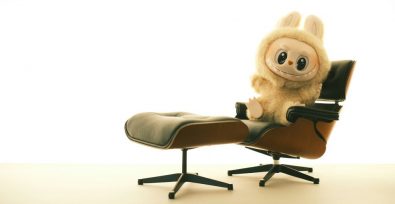
They sell out in minutes, spark fistfights at mall pop-ups, and count Rihanna among their fans. But the chubby, pointy-eared “Labubu” dolls made by Chinese toy giant Pop Mart are facing an uncomfortable question: is the fluffy cotton stuffing inside them picked by workers who had no choice in the matter?
The New York Times bought 20 Labubus listed as containing cotton and had them independently examined. Of those, 16 contained cotton traced back to the Uyghur Region, which US law bans due to its links to forced labor. The affected dolls were purchased from retailers including Amazon, eBay, Shein, AliExpress, and directly from Pop Mart. Advocates are pushing for US Customs and Border Protection (CBP) to ban the dolls.
Law vs. trend
The Labubu craze has swept global markets over the past two years. Shoppers have waited hours in line and paid thousands of dollars for the most coveted versions of the furry, serrated-tooth dolls. Pop Mart’s revenue from the Americas rose more than 700% last year, reaching 18% of overall sales. Yet that commercial success has now drawn serious legal scrutiny.
According to US policymaker Christopher H. Smith, “Pop Mart should prove that all of its dolls in the United States are slave-labor-free. If they cannot, customs has the authority to stop all Labubu imports, and I will ask them to do so.”
In 2021, the US Congress passed the Uyghur Forced Labor Prevention Act (UFLPA). The law bans any product made in whole or in part in the Uyghur Region unless an importer can prove it was not made with forced labor. The Uyghur Region produces more than 90% of China’s cotton. Crucially, the burden of proof falls on the company, not the government.
The New York Times reports,
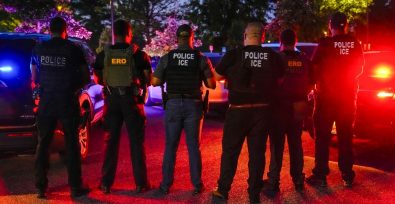
Using information on the doll tags and boxes, The Times tracked the 16 Labubus that had Xinjiang cotton back to three separate factories in southeastern China that were operated by third-party contractors.
One of these factories sits in an industrial park in Jiangxi Province. China Labor Watch, a nonprofit, carried out dozens of interviews last year at the factory, which employs more than 4,000 people. In a report published in January, the group documented what it said were various labor law violations, including a lack of protections for underage workers and people working without proper contracts.
Pop Mart said it would investigate its supply chain and described its standards as among “the highest.” However, the company has already come under fire for exploitative working conditions of its suppliers. The company also acknowledged that a small percentage of its dolls use cotton for apparel and said it was developing a plan to switch to alternative materials for the US market. Meanwhile, nonprofit groups have already submitted evidence about Pop Mart’s Uyghur Region cotton use to CBP.
The human cost behind the supply chain
The Uyghur Region is home to a predominantly Muslim population. Human rights groups and journalists have documented state-imposed forced labor, forced sterilization, and heavy surveillance targeting non-Han ethnic minorities there. In January, UN experts said the treatment of Uyghurs in China may amount to enslavement and a crime against humanity. The Chinese government denies these characterizations, describing its programs as poverty alleviation and counter-terrorism measures.
Freedom United continues to call on companies to conduct robust due diligence of their supply chains. We also urge China to end Uyghur forced labor. Join the movement today!


Freedom United is interested in hearing from our community and welcomes relevant, informed comments, advice, and insights that advance the conversation around our campaigns and advocacy. We value inclusivity and respect within our community. To be approved, your comments should be civil.
Personally I think these dolls are vile. I also dislike the fact that parents buy into their children’s peer pressure. Perhaps if schools took some responsibility to inform children at their level that those making them are not treated well these silly trends might stop. Is there any movement at all in improving labour relations in this area? And are such tests uniformly used.
The Xinjiang region of China has been growing and harvesting cotton for centuries. There is no reason to assume that all cotton from from that area was produced by forced labor. Indeed, all the evidence points to the fact that the vast majority of cotton produced there was produced by free farmers. The USA considers China its enemy, and will use any excuse to attack it economically, and pass absurd bills to back up its economic aggression. We need not follow.
Why anyone would even want to buy one of these is beyond me let alone queue up to spend £1,000 on them beggars believe 😳🤦♀️
If this is true this exploitation should be heavily publicised and the items banned by all border forces.