


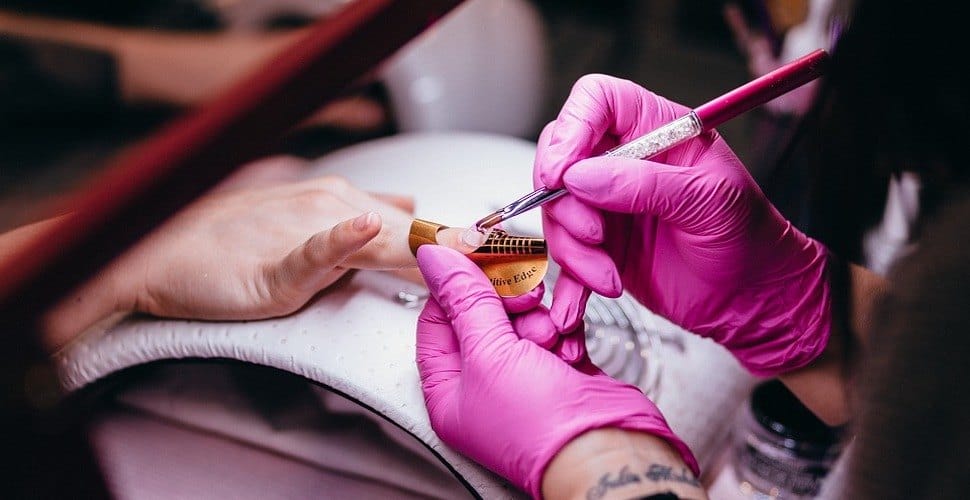
A recent police raid on a London nail bar salon suspected of trapping migrant workers in modern slavery resulted in three arrests on charges of human trafficking and the rescue of four young employees, reported The Guardian on Tuesday.
Cheap nail salons have proliferated in the United Kingdom in recent years, but their low prices often come at a very real human cost.
Although there have been few successful prosecutions of nail bar owners, modern slavery is believed to be pervasive in the industry where migrant workers vulnerable to exploitation may be trapped in forced labor.
This particular raid saw 20 police offers and an interpreter descended on a Peckham nail bar, one of five bars simultaneously raided in the London borough of Southwark.
Such raids are complicated processes, with the language barrier making it difficult to establish who might be a victim and who might be a trafficker.
The Guardian reports:
Outside the shop, more police officers are questioning a tired-looking Vietnamese man who has been peering through the back of the building, then watching proceedings from the other side of the high street and making calls. They ask him to hand over and unlock his phone.
“It’s not my phone,” he tells them, speaking Vietnamese to the translator. “Some lady just gave it to me.”
“Can you just tell him I’ve never heard such rubbish in my life,” the police officer says, holding the phone in front of the man’s face to see if it would unlock with facial recognition.
“Tell him we are going to arrest him on suspicion of theft of a mobile phone.” The man unlocks his phone and officers look through the 20 calls he has made and received during the 45 minutes since the raid began, establishes that a number of calls have been made to staff inside the shop and decide to arrest him on suspicion of involvement in modern slavery and people trafficking.
Shortly, another man comes to the shop, pushing a small baby in a pram, and looks through the windows at the staff inside. “Is this your shop?” police ask him. He shakes his head, but when asked to show ID, police recognise him as the man named as the shop’s manager on a notice inside. Another officer takes the pram, handcuffs him and tells him: “You are under arrest for arranging and facilitating modern slavery. We’ll look after the baby, don’t worry.”
The extent of human trafficking in the manicure industry was thrust into public attention in October, when the bodies of 39 Vietnamese migrants were found in a lorry in Essex. Experts believe at least some of them were being smuggled into the country to work in nail bars.
While we may find it easier to associate modern slavery and human trafficking with industries such as cannabis farming and sex work, few expect trafficking to happen in plain view on their local high street.
Even after the Essex tragedy, some people may assume that well-established nail salons must be free from exploitation, despite red flags such as workers having limited knowledge of English and offering services for unusually low prices.
Meanwhile, the UK government has been unsuccessful in addressing the problem. Anti-slavery legislation was introduced in 2015 but its funding, implementation, and conflict with existing anti-immigration policies has been criticized.
Despite the evidence that modern slavery is widespread in the manicure industry, only one high-profile case of human trafficking has been successfully prosecuted.

Freedom United is interested in hearing from our community and welcomes relevant, informed comments, advice, and insights that advance the conversation around our campaigns and advocacy. We value inclusivity and respect within our community. To be approved, your comments should be civil.
A few things we do not tolerate: comments that promote discrimination, prejudice, racism, or xenophobia, as well as personal attacks or profanity. We screen submissions in order to create a space where the entire Freedom United community feels safe to express and exchange thoughtful opinions.