

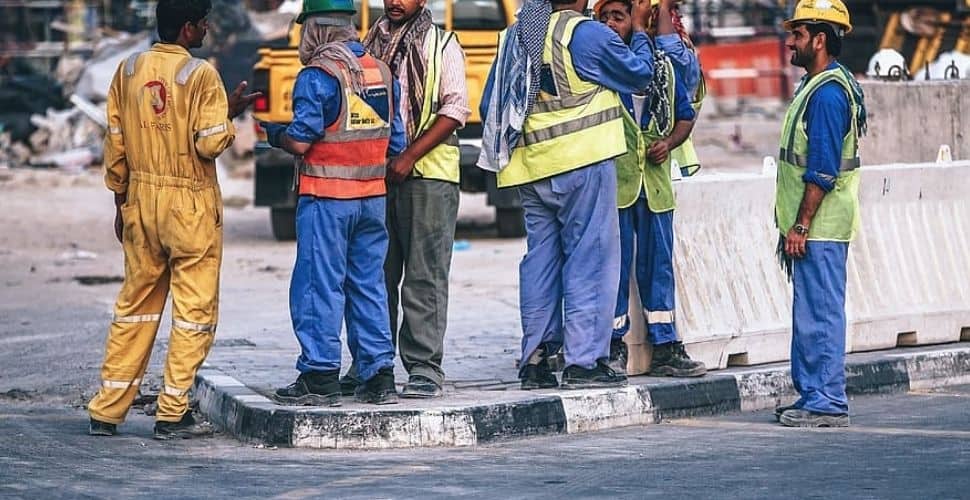
Millions of people enter global supply chains not through a job centre or an HR portal, but through a chain of brokers, agents and informal intermediaries that the company at the top may have never heard of. By the time a migrant worker arrives at a factory, farm or construction site, they may already be in debt—and that debt may be used to trap them in debt bondage, a form of modern slavery.
This is the central argument of ‘The Labor Supply Chain’, the second paper in Freedom United’s Governance & Supply Chain Series, authored by Freedom United’s board director Kamil Gerard Ahmed with Assel Orumbayeva.
The cost doesn’t disappear—it moves
In line with international standards, companies routinely demand that their labor providers comply with zero-fee recruitment policies. What they often don’t examine is whether the commercial arrangement actually funds responsible recruitment. When it doesn’t, the cost doesn’t disappear.
As Ahmed writes: “It moves down the chain to the person with the least bargaining power: the worker financing the company’s recruitment through a loan taken out in a village the company has never heard of.”
Boards that congratulate procurement on an unusually low labor bid, the paper argues, should be asking a harder question: who is actually paying the difference?
A framework boards can use
The paper introduces TRACE—a five-part governance framework designed to give company leadership real visibility into how workers enter their supply chains:
Trace: Map the full labor supply chain, including origin-country agents and subagents.
Resource: Fund responsible recruitment through realistic pricing, budgets and contractual terms.
Assure: Verify the worker experience through independent, worker-centered evidence.
Correct: Reimburse prohibited fees, protect workers and remedy the coercive condition.
Escalate: Assign accountable ownership, escalation thresholds and regular board reporting.
The framework draws on Patagonia’s experience in Taiwan, where audits revealed labor brokers charging migrant workers up to US$7,000 to secure jobs—debt that could take two years to repay on a three-year contract.
“Patagonia traced the labor chain by extending scrutiny beyond its direct factories. It resourced an employer-pays model for future recruitment and assured implementation through worker-focused assessments. It corrected past harm through reimbursement requirements and escalated the issue to top management, which accepted that the program required additional staffing and external expertise. The five elements are not separate controls. They succeed or fail as a system.”
The paper’s conclusion is stark: modern slavery risk often doesn’t begin at the workplace. It begins when a promise is made, a fee is demanded, and a debt is created. By the time the worker arrives, the governance failure has already occurred.
The first paper in this series explores ‘What Healthcare Learned about Evidence and What Supply Chain Boards Still Miss‘ written by Freedom United Board Directors Dr. Aparna Ahuja and Kamil Gerard Ahmed.





Freedom United is interested in hearing from our community and welcomes relevant, informed comments, advice, and insights that advance the conversation around our campaigns and advocacy. We value inclusivity and respect within our community. To be approved, your comments should be civil.
A few things we do not tolerate: comments that promote discrimination, prejudice, racism, or xenophobia, as well as personal attacks or profanity. We screen submissions in order to create a space where the entire Freedom United community feels safe to express and exchange thoughtful opinions.