


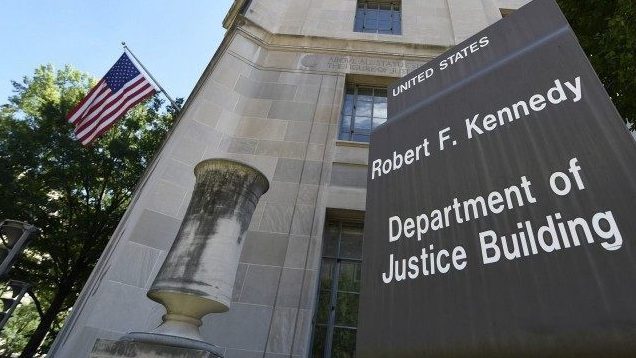
In a major blow to survivors of human trafficking, the US Department of Justice has announced that it will no longer allow funding to be used to help survivors get legal representation to clear their criminal records that resulted from their victimization. The decision by the Office for Victims of Crime will affect $77 million of human trafficking grants this year.
The abrupt policy reversal was initiated by the Trump administration and goes against the consensus of survivors, advocates, and law enforcement. The new funding restrictions are expected to go into effect in just a couple weeks.
Related: Do you want to protect US youth from trafficking? Act now.
In an opinion piece in The Hill, Cyrus R. Vance Jr., the Manhattan District Attorney, and Kate Mogulescu, an Assistant Professor of Clinical Law at Brooklyn Law School, write:
It is widely acknowledged that victims are frequently arrested when they are trafficked. A 2016 National Survivor Network survey found that over 91 percent of respondents reported having been arrested, over 40 percent reported being arrested 9 times or more.
No one questions the detrimental impact this has on survivors’ ability to move forward. Criminal records act as concrete barriers for survivors, and lead to denial of employment, housing, and other services. Furthermore, the message to survivors living with criminal records because of their trafficking is clear — you did something wrong, you deserve this, this will live with you forever.
That’s why Manhattan prosecutors screen every prostitution arrest for evidence of trafficking and dismiss prostitution cases after individuals receive counseling sessions and other services.
But the most effective legal response to correct the injustice of past convictions is vacatur or expungement, laws that provide survivors a way to clear their record of charges they were convicted of that were a result of trafficking. New York was the first state to pass such a law in 2009, and almost every state in the country has taken some steps toward relieving survivors of the burden of a criminal record since then.
In one example, Vance and Mogulescu point to the case of a young woman who was sex trafficked for five years in New York, starting when she was just 16. During that time, she was arrested for prostitution six times.
Yet, because of collaboration between the Manhattan District Attorney’s Office and the Brooklyn Law School, her convictions were vacated, ensuring that she would she would not be haunted by them for the rest of her life.
Prosecutors have come to rely on partner organizations to help identify trafficking victims and bring vacatur motions or expungement petitions. Under the new funding rules, victims who can’t access legal representation will be forced to file petitions on their own — a significant burden to those seeking justice.
As Vance and Mogulescu conclude, this policy will have tremendous impact on the ability for trafficking survivors to simply live their lives:
“Funding for this work is critical — for the survivor trafficked into prostitution over two decades ago, who has focused on her education, earned a Masters degree in counseling, but is prohibited from taking a state licensure exam because of her criminal record; for the survivor parent of a nine-year-old child who faces humiliation at being fingerprinted to chaperone a school trip; for the survivor who secures an entry level service sector job but has the offer rescinded when a background check reveals her criminal record.”
Next Steps: Join our campaign to protect US youth from exploitation.





Freedom United is interested in hearing from our community and welcomes relevant, informed comments, advice, and insights that advance the conversation around our campaigns and advocacy. We value inclusivity and respect within our community. To be approved, your comments should be civil.
A few things we do not tolerate: comments that promote discrimination, prejudice, racism, or xenophobia, as well as personal attacks or profanity. We screen submissions in order to create a space where the entire Freedom United community feels safe to express and exchange thoughtful opinions.