


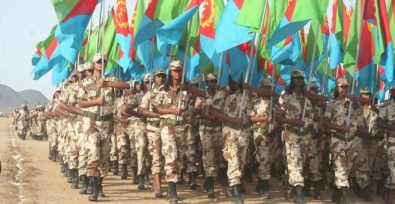
Eritreans experienced forced labor under compulsory national service
Eritrea’s policy of indefinite national service, which includes civil service and military service for the “furtherance of national development,” was recently investigated by a U.N. independent human rights investigator. The resulting report found torture, inhumane or degrading treatment, sexual and gender-based violence, forced labor, and abusive conditions were regularly experienced by Eritreans during their compulsory national service.
No rule of law, no checks and balances, and no constraints on power
Eritrea has long been considered one of the world’s most repressive countries by human rights groups, mainly due to the policies of President Isaias Afwerki who has never held an election since independence from Ethiopia. President Afwerki’s policy of indefinite national servitude has led to a steady stream of refugees seeking asylum from atrocities committed under this policy.
U.N. investigator Mohamed Babiker said witnesses reported-
“Eritrean conscripts continued to be forced to participate in national/military service under threat of severe punishment to themselves and their families,”
According to refugees, in order to ensure this indefinite service requirement, the government evicts families from their homes. This includes turning out children, pregnant women and older persons, locking their belongings up in their houses and confiscating their livestock, leaving families homeless and destitute. This type of treatment fits the definition of forced labor and modern slavery as families are left with no real choice but to comply with the repressive policy.
Conscientious objection to forced military service leads to disappearance and torture
As part of the investigation, Babiker also identified a surge in the forced recruitment of Eritreans into the military and an increase in the use and extremity of the coercive practices used to force citizens into military action. Conscientious objection is illegal, so those trying to escape forced conscription are subjected to arbitrary detention in highly punitive conditions as well as enforced disappearance and torture.
Babiker said –
“Interviews with Eritrean asylum-seekers and refugees point to indefinite national service as the main driver of people leaving Eritrea.”
The national service program was put in place to bolster national development but is clearly having the opposite effect. By forcing young people to leave the country to escape this inhumane forced labor policy it also leaves them vulnerable to human trafficking as they migrate to find safety. This brutal program of forced military service and forced labor under threat of harm and torture to individuals and families needs to end.



Freedom United is interested in hearing from our community and welcomes relevant, informed comments, advice, and insights that advance the conversation around our campaigns and advocacy. We value inclusivity and respect within our community. To be approved, your comments should be civil.