


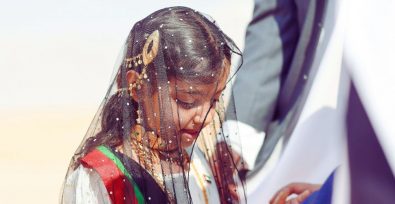
Child marriage is on the rise again in crisis-affected regions, exposing girls to exploitation, violence and conditions widely recognized as forms of modern slavery. Worsening conflict, displacement, and poverty are pushing more families to marry their daughters at a young age. And experts stress that child marriage is not a cultural issue; it’s a form of gender-based violence and a pathway into exploitation.
Marriage as a survival strategy
In recent years, child marriage has been on the decline. However, that trend is now reversing in some areas. And it is conflict and economic hardship that are fueling that rise. In Gaza, most surveyed households reported increased pressure to marry girls under 18. Families facing displacement, insecurity, and loss of income often see early marriage as a way to cope. In some cases, it is viewed as protection. In others, it is seen as a financial necessity. However, advocates warn that this “solution” places girls in dangerous and exploitative situations.
Sima Alami, adolescent and youth program officer at the UN agency for sexual and reproductive health shared with UN News:
Families see marriage as a survival strategy amid displacement, poverty and insecurity (and) some evidence suggests that 63 per cent of girls married at a young age have experienced physical, psychological or sexual violence.
Child marriage is widely recognized as a form of forced marriage. In turn, forced marriage is considered a form of modern slavery because individuals cannot leave freely and sometimes are subjected to control, abuse or coercion. Additionally, marriage usually means girls are taken out of school and often placed in unequal relationships with older partners. Survivors’ testimony and evidence show this common scenario creates long-term dependency and increases their risk of exploitation.
Survivors face violence, isolation and long-term harm
A recent report highlighted that while the rate of children getting married had steadily decreased in Gaza over the past decade, down to 17.9% in 2022, the war has undone much of that progress. Tellingly, other crisis areas, like Bangladesh and Libya are also seeing an increase in child marriage for the same reasons. UN data underlines that many girls who marry early experience physical, psychological or sexual violence.
Alami shared:
More than 100 suicides or attempted suicides have been documented among survivors of violence…underscoring that child marriage is a form of gender-based violence.
Indeed, millions of girls are affected by child marriage each year globally. Experts estimate that around 12 million girls are married before the age of 18 annually. At the same time, access to healthcare and support services is often limited, especially in crisis settings. Accordingly, this increases the risks associated with early pregnancy and childbirth. And survivors also face isolation from traditional support networks. After marriage, many are cut off from their families, education, and community support systems. Consequently, escaping abuse becomes much harder.
Urgent need for protection and prevention
The UN is calling for urgent action to protect girls at risk. And programs led by UN agencies are working to provide safe spaces, psychosocial support, and resources for girls. However, needs are outpacing available support. And advocates stress that prevention must remain a priority. Child marriage is not inevitable—even in crisis settings.
Addressing child marriage requires a survivor-centered approach. Girls must be seen not as burdens, but as individuals with rights, agency and potential. You can help by adding your voice to ours and signing our petition to demand an end to forced child marriage, wherever it is found. Without stronger protections and social support services, experts warn that child marriage will continue to function as a hidden form of modern slavery—trapping generations of girls in cycles of exploitation, violence and harm.



Freedom United is interested in hearing from our community and welcomes relevant, informed comments, advice, and insights that advance the conversation around our campaigns and advocacy. We value inclusivity and respect within our community. To be approved, your comments should be civil.