


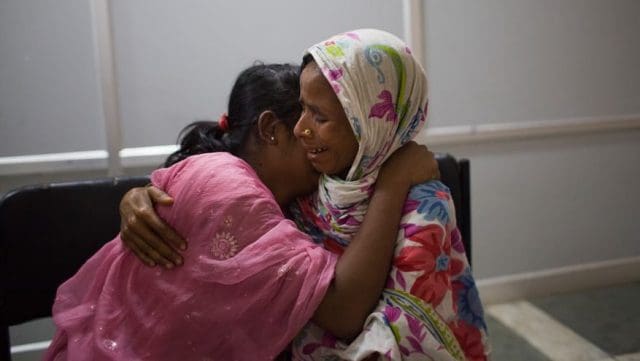
Tahmina was just 13 when her own sister sold her into marriage with a man 30 years her senior. The pricetag? 50,000 rupees (£557).
Tahmina had travelled by bus, train, and car with her sister and brother-in-law, thinking they were heading to Delhi. Instead, she was taken to a remote village in Haryana and sold into marriage.
“They took me to Haryana and kept me in a room. Strange men were coming to see me and offering money and my own sister was outside that room knowing what was going to happen to me,” she said.
With the help of Empower People, an anti-trafficking charity, Tahmina managed to escape and has been reunited with her mother. Yet thousands of other Indian girls continue to be trafficked into forced marriages.
The Guardian reports:
Tahmina escaped, but across north-west India, thousands of other women and girls are lost to their families and trapped in lives of sexual and domestic slavery as paros – meaning those who have been purchased or sold.
For centuries, bride trafficking has been a booming business in the states of Haryana, Punjab and Rajasthan in north India. There is no official government data on the numbers who have fallen victim to trafficking rings, but it is believed that hundreds of thousands of women and girls, mainly from Assam, West Bengal, Jharkhand or Bihar, have been sold into marriage.
Activists believe the scale of bride trafficking is still not properly understood. A door-to-door survey by Empower People found 1,352 trafficked wives living with their buyers in 85 villages in north India in 2014.
Her husband, Mubin, says he purchased Sanjida because he could not find a local woman to marry. “Poor men like us, who don’t have much land, have a lot of difficulty in finding a wife here,” he said.
Paros often face being disowned by the family if they become widows and even those women who manage to escape find that they are stigmatized if they return home.
Tahmina’s own father refused to accept her back into the house when she returned to Assam due to the shame of his daughter being a paro. Tahmina now lives with her grandmother.





Freedom United is interested in hearing from our community and welcomes relevant, informed comments, advice, and insights that advance the conversation around our campaigns and advocacy. We value inclusivity and respect within our community. To be approved, your comments should be civil.
A few things we do not tolerate: comments that promote discrimination, prejudice, racism, or xenophobia, as well as personal attacks or profanity. We screen submissions in order to create a space where the entire Freedom United community feels safe to express and exchange thoughtful opinions.