

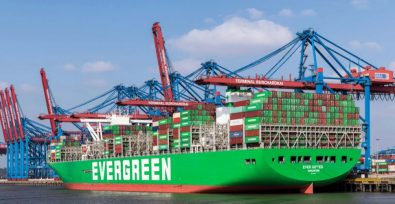
Over the last several months, a hundred-year-old legal concept has taken hold of governments like a fever seemingly overnight—forced labor import prohibitions. Forced labor import prohibitions are a trade law mechanism that allow governments to bar the entry of goods deemed to be made with forced labor.
The US has had such a prohibition since 1930, but it essentially did not enforce that law until 2016. Then, under a multilateral trade agreement with the US, Canada and Mexico adopted similar prohibitions in 2020 and 2023, respectively. The EU passed its own forced labor regulation in 2024 that prohibits products made with forced labor from being sold, imported, exported, or made available on the EU market. This will come into full effect at the end of 2027.
The rush to implement forced labor import bans
Since March of this year, there has been a sudden rush to create new import prohibitions all over the world. Under an extraordinary threat of tariffs from the US government, many other governments have implemented, drafted, or committed to adopting forced labor import prohibitions.
As it stands at the time of writing, Cambodia, Ecuador, El Salvador, Guatemala, Honduras, India, Indonesia, Pakistan, Sri Lanka, Trinidad and Tobago and Viet Nam have adopted new prohibitions. Brazil, Dominican Republic, Peru, Philippines, and Uruguay have drafts awaiting approval. Argentina, Bangladesh, Jordan, Malaysia, and Taiwan have committed to action under US reciprocal trade agreements. Norway has indicated it will adopt the EU’s prohibition, and parliamentarians and government ministers in the United Kingdom have made public commitments suggesting they will adopt one as well.
An economic pressure on corporations
Forced labor import prohibitions represent one of the many tools we have to fight forced labor in supply chains. And it’s one that appears to have an unusual degree of influence over often intractable corporations. Governments can and sometimes do address forced labor domestically. But those efforts often fail or are impeded. Meanwhile, worker-driven efforts are often ignored by corporations.
When governments refuse to allow the import of goods tainted by forced labor, it puts significant economic pressure on such companies. And in cases where forced labor is practically entirely intractable, such as in cases of state-imposed forced labor in the Uyghur Region, Turkmenistan, or North Korea, these laws can allow governments to protect their markets, citizens, and businesses from those goods altogether.
There are, without a doubt, companies that continue to use forced labor even after being banned from global markets. However, this economic pressure does seem to compel many companies that otherwise did not budge in the face of concerted media, civil society, union, and worker-driven efforts to improve their business practices. For example, a prohibition on goods made with Uyghur forced labor has led companies to find alternative sourcing locations. This has in turn resulted in a significant diversification of solar and other supply chains.1
Helping workers seeking remediation
Even more compellingly, even though import bans have only been deployed as a tool to address forced labor in supply chains for a few years now, it appears that law enforcement action against companies that use forced labor can lead to significant and meaningful remediation.
US customs authorities have recovered over $85 million in wages2 for forced labor survivors thanks to the US’s forced labor import prohibition. Further, the effects are not limited only to the specific companies that are targeted for enforcement action. Recently, Taiwan’s government, and its bicycle industry3 in particular, have rapidly changed course on worker recruitment due to US customs action on forced labor.
Imagine if more governments took part in these efforts and genuinely worked to enforce them. Forced labor survivors would benefit from the potential remediation many companies only agree to in response to enormous legal consequences.
Removing unfair market advantages
The downward pressure on worker wages that results from competition with companies using forced labor could be lifted a bit as well. Manufacturers that uphold high labor standards would not have to compete against the artificially cheap goods made with forced labor. And businesses seeking clean supply chains would would know which suppliers to avoid. And consumers would have more confidence that their governments were not allowing tainted goods to be sold in the markets.
To be fair, forced labor import prohibitions will not solve forced labor, any more than any law can fully eliminate illicit practices. Still, the more countries that participate, the fewer markets available for forced labor made goods. And the higher the pressure for change.
But these results are only possible if governments pass strong, effective laws and then enforce them as well. In the coming months and years, civil society organizations and workers rights groups have the opportunity to influence whether these laws contain the remediation provisions, due diligence requirements, penalties for non-compliance, and resource allocation that will make these laws effective.
Editor: visit our tool https://www.freedomunited.org/forced-labor-import-bans/ for a country-by-country look.




Freedom United is interested in hearing from our community and welcomes relevant, informed comments, advice, and insights that advance the conversation around our campaigns and advocacy. We value inclusivity and respect within our community. To be approved, your comments should be civil.