

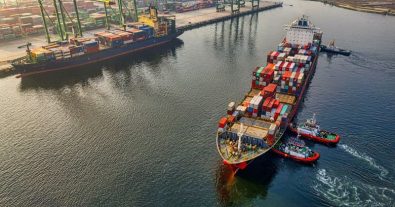
The Trump administration has proposed new tariffs on imports from 60 countries, including major trading partners like Canada, Mexico and the European Union. This is the second time that the administration has tried to increase import taxes after previous attempts were struck down by courts as unlawful. This time around, the administration claims the tariffs are for failing to do enough to stop goods made with forced labor from entering global supply chains.
Tackling forced labor is worthy goal and deserves to be taken seriously. It is real, widespread, and the world has not done nearly enough to stop it. But when a policy claims a moral purpose, it’s worth asking whether the design actually matches the stated goal. And on that question, this proposal invites some scrutiny.
What’s on the table and what’s not
The proposal follows a US investigation launched in March into whether major trading partners were adequately enforcing bans on goods made with forced labor. The report concluded that 54 countries had failed to establish or enforce effective prohibitions on imports linked to forced labor.
Six others—including Canada, the European Union, Mexico and Indonesia—were found to have enforcement measures in place but not to be applying them effectively. Under the proposal, the UK, EU, Canada, Mexico, Bangladesh and several other countries would face a 10% tariff. China, India, Japan and dozens of additional nations would face tariffs of 12.5%.
The BBC reports:
The US Trade Department said these countries will face the tariffs because of their failure to address the importing of goods made with forced labour.
The UK said it is tackling forced labour, China denied goods are made with forced labour, and the EU said the tariffs were unjustified.
Meanwhile, an India analyst said the move was a pressure tactic as trade negotiations between the countries continue.
However, several sectors are not subject to the new tariffs including rare earth minerals, coffee, beef, and parts of the tech industry. But we’ve reported on forced labor in many of these supply chains for years. They’re well known and well documented to have modern slavery ties.
Want to see how deep this goes? Our Freedom Map tracks forced labor risks across industries and countries worldwide—including plenty that didn’t make this tariff list.
Closer to home
US Trade Representative Jamieson Greer said that countries allowing forced labor goods into their markets “create unfair competition for American workers.” But what about forced labor goods produced domestically?
As pointed out by Canadian advocates, the United States has a longstanding system of forced prison labor. This system is explicitly permitted by the 13th Amendment to the Constitution, which abolished slavery “except as a punishment for crime.” Incarcerated people in the US are required to work, often for wages of pennies per hour or no wages at all producing goods and services that enter the broader economy. Worse yet, many times they are forced under threat of punishment.
This forced labor system has landed the US in the Global Slavery Index and a special report in 2023 by UN human rights experts denoting America’s “plantation style” prisons.
The US prison labor goods would never be caught by a tariff regime aimed at imports.
And neither are imports generated from state-sponsored forced labor a focus of these tariffs, such as Turkmenistan’s cotton sector, or China’s export production that relies on Uyghur forced labor.
Hélène de Rengerve, senior advocate for corporate accountability at Human Rights Watch told Reuters this tariff policy instead targets trade volumes and political considerations, saying:
It is also not clear how will this be an incentive to actually improve the situation. It might even create more political resistance in some countries. I fear it might be counterproductive to the objective of fighting forced labour.
Are tariffs the right tool?
Anti-trafficking and human rights organizations broadly agree that forced labor is a serious global problem. They are largely skeptical on whether this tariffs policy is the right response.
Peter Frankental from Amnesty International is not convinced:
Trade measures can play a role in addressing forced labor risks, but they are not a substitute for effective enforcement, corporate accountability, and mandatory human rights due diligence.
None of this means forced labor shouldn’t be addressed in trade policy. It should be. Supply chain transparency, corporate accountability, and meaningful enforcement are all legitimate goals—and ones that actually require sustained political will.
What would a policy genuinely designed to protect workers look like? It would probably not exempt the industries with the worst labor records. It would probably require companies to disclose their supply chains and conduct due diligence. And it would probably involve serious engagement with the workers most affected.
The US Trade Representative’s office will accept public comments on the proposed changes through July 6. There will be a public hearing on July 7. That is an opportunity worth using. Whatever the motivation behind the policy, the underlying problem—millions of people working under compulsion, with no recourse, in supply chains that touch almost everything we buy—is real.
In the meantime, you can join the Freedom United community in calling on governments to put people before profit and politics. Take action today.
You can submit public comments to the US Trade Representative at ustr.gov by July 6, 2026.




you don’t name the proposal for which you request public comment