


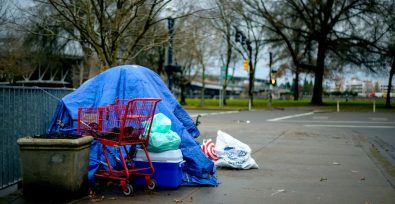
A controversial bill moving through Louisiana’s legislature would make sleeping outside a crime—and could force unhoused people into unpaid labor if they cannot afford fines or treatment.
Advocates warn the proposal does more than criminalize homelessness. It risks turning poverty into a pipeline for coerced labor.
Coercion in disguise
House Bill 211 would criminalize sleeping outside by banning “unauthorized camping” on public property. People caught sleeping outdoors could be sentenced to up to six months in jail, fined $500, or both. Repeat offenders might face up to two years in prison and increased fines.
To avoid jail time, the individual could undergo a mandatory 12-month treatment program. But there’s a catch. According to a report by Newsweek, those unable to pay could be required to perform unpaid labor. A move that advocacy groups argue amounts to coerced labor.
Meanwhile, lawmakers are framing the bill as a “pathway to treatment.” But A bill that forces unhoused people to choose between jail and involuntary treatment, makes them pay for it, and if they can’t pay, forces them to perform unpaid labor is not treatment—it is coercion.
As a finance expert, Michael Ryan told Newsweek:
HB 211 is a debt trap. It creates a population of people who are, by definition, unable to pay. And then converts that inability into a labor obligation…No legitimate treatment program requires the patient to work off their bill under threat of incarceration… Once you’re in the program and can’t pay, you’re not a person in treatment anymore. You’re a labor asset.
Perpetuating cycles of exploitation
Additionally, the policy does nothing to address the real drivers of homelessness. Instead, it deepens instability, and unhoused people are already at a disproportionate risk of trafficking and abuse. Arrest records and jail time make it harder to find housing or employment, increasing the risk of repeated arrests, and thereby sustaining a cycle of abuse and exploitation.
Bill Quigley, director of the Gillis Long Poverty Law Center at Loyola University New Orleans, called the premise fundamentally flawed. He describes the bill to Common Dreams as:
Cruel theatre of the absurd based on the lie that people choose to be homeless… if people had the resources to pay for housing and physical and/or mental health services, they would not be on the street.
This is part of a broader shift. Across the US, anti-homeless laws are expanding under a punitive model reinforced by a 2025 Trump executive order that rejects Housing First approaches. These policies criminalize homelessness, creating conditions where the most vulnerable can be pushed into systems of coercion.
In Utah, officials have proposed a facility that housing advocates warn could function like an “internment camp,” where unhoused people may face forced labor. Louisiana’s bill is among the most aggressive yet—and could set a precedent nationwide.
Criminalizing poverty as a source of cheap labor
Critics say the bill echoes older systems of exploitation and control rooted in US history. By criminalizing vulnerable populations to push them into forced labor.
The 13th Amendment abolished slavery—except as punishment for a crime. That exception created an economic incentive for increasing incarceration and exploiting incarcerated people as a source of cheap labor, predominantly affecting Black people and people of color.
House Bill 211 exploits that same loophole. By criminalizing homelessness, the law turns survival—sleeping outside—into an offense. Once people enter the criminal justice system, they can be fined, jailed, or compelled to work if they cannot pay—effectively converting poverty into a source of labor.





Freedom United is interested in hearing from our community and welcomes relevant, informed comments, advice, and insights that advance the conversation around our campaigns and advocacy. We value inclusivity and respect within our community. To be approved, your comments should be civil.
Homeless people’s first need is housing, next come the jobs. Once you have a roof over your head, in most cases, you can begin to look for a job. Your rent should be based on your income. There are some who have addiction and/ or other mental health issues. Those issues need to be addressed first.
World War against poor people. Stop capitalism.
Why use two words where one will do? Slavery is the more compact word.
Ok so who is going to help track people disappeared into a malpractice system that pretends normal human sleep is a disease and forces unpaid labor to fund that malpractice? Are we just going to vanish like when the gestapo locked up the work-shy or is the same community of activists that tracks undocumented kids through I.C.E.’s trafficking system going to rise to the occasion of resisting the secret police? The safety of my loved ones may depend on that answer.