


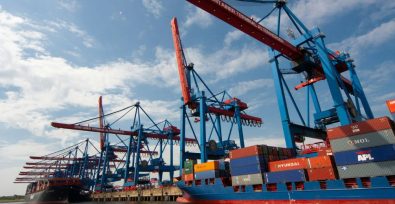
The United States has launched wide-ranging trade investigations into more than 60 countries over concerns about forced labor in global supply chains. While framed as an anti-trafficking measure, the timing and scope suggest a more politically driven agenda: the probes could provide a legal pathway to reinstate tariffs struck down by the US Supreme Court.
Countries across Asia, Latin America, and Europe now face scrutiny, not just for domestic labor practices, but for how they police imports—raising concerns that forced labor frameworks are being co-opted to serve trade policy rather than protect workers.
Focus shifts to enforcement beyond borders
The newly announced investigations fall under Section 301 of the Trade Act of 1974. This law allows the US government to respond to unfair foreign practices with tariffs or other penalties. US Trade Representative Jamieson Greer described the probes as a way to determine whether governments have failed to prevent goods made with forced labor from entering their markets.
Greer stated in Sourcing Journal:
For too long, American workers and firms have been forced to compete against foreign producers who may have an artificial cost advantage gained from the scourge of forced labor. These investigations will determine whether foreign governments have taken sufficient steps to prohibit the importation of goods produced with forced labor…
While superficially framed as a human rights measure, critics argue the underlying goal is political: to recreate Trump-era tariffs after the Supreme Court ruled them unlawful. Using forced labor as a pretext risks undermining the legitimacy of real anti-trafficking efforts.
Global backlash and legal concerns emerge
Unsurprisingly, the strategy has already sparked criticism from trading partners and policy experts. Several countries have pushed back strongly. China has warned it may take countermeasures. Meanwhile, officials in Bangladesh and Thailand have questioned the basis of the investigations. At the same time, experts say the approach raises complex legal and practical questions. Highlighting uncertainty around expectations, Wendy Cutler, senior vice president at the Asia Society Policy Institute, questioned:
What will be the bar? Are we expecting countries to mirror our detailed law or something more or less? And if enforcement is also a criterion, will countries that are now working to implement a law be found ‘guilty’ because they first need a law before they can enforce it?
Many countries already ban forced-labor goods but lack resources for enforcement. Politicized investigations risk penalizing countries for capacity gaps rather than actual exploitation.
By conflating human rights enforcement with trade leverage, the policy undermines both objectives. Forced labor becomes a tool for tariffs rather than a means to protect vulnerable workers.
Pressure grows for transparent supply chains
Forced labor is a human rights issue, not a political tool. Misusing these frameworks threatens both the workers they aim to protect and the broader credibility of global anti-trafficking efforts. Without targeted, survivor-centered action, exploitation will continue to thrive, hidden within the layers of global trade. This is why Freedom United is interested in one priority: putting people, not politics, before profit. Take action.



Freedom United is interested in hearing from our community and welcomes relevant, informed comments, advice, and insights that advance the conversation around our campaigns and advocacy. We value inclusivity and respect within our community. To be approved, your comments should be civil.