


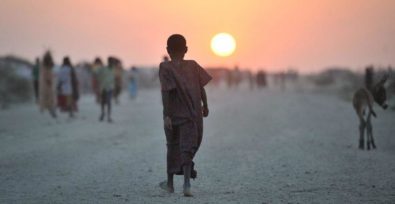
Hundreds of children escaping the assault on El Fasher have arrived alone in Tawila, a town already overwhelmed by displacement. Many walked for days without food, fled armed groups in the dark, and became separated from their families in the chaos. Their isolation, combined with collapsing protection systems, is driving urgent concerns about trafficking, sexual exploitation, and forced conscription.
Children fleeing alone into overcrowded camps
At least 400 unaccompanied children have reached the town of Tawila in western Sudan after the Rapid Support Forces (RSF) seized the city of El Fasher. Aid groups say the true number is far higher. Many children walked for days through the desert. They arrived terrified, dehydrated, and deeply traumatized. Some were separated from their parents during chaotic escapes. Others’ parents are believed to have been detained, gone missing, or killed.
El Fasher fell on October 26 after an 18-month siege that starved residents of food, medicine, and other essential supplies. The takeover prompted more than 100,000 people to flee, with many crossing into Chad. Those who remain in Sudan often seek safety in Tawila, about 60 kilometers from El Fasher. Humanitarian workers say many children show signs of acute trauma. Some cannot speak when they arrive. Many report hiding for hours, traveling only at night, and witnessing violence.
Conditions in Tawila are deteriorating fast. Displacement camps are overwhelmed. According to Sudanese physicians’ groups, more than 650,000 displaced people are now in the area. Most live in informal sites without water systems or latrines. Less than 10 percent have reliable access to sanitation.
Trafficking and exploitation threaten women and children
The instability has created conditions that traffickers and armed groups routinely exploit. Displaced families lack safe shelter, secure routes, and access to basic services. With protection systems collapsing, women, girls, and unaccompanied children face grave risks.
Al Jazeera reports,
… a group of UN experts warned … that the deteriorating situation in the region has opened Sudanese women and girls up to a heightened risk of sexual exploitation and trafficking. Displaced children are also increasingly vulnerable to being recruited to fight in the escalating conflict, the experts said. ‘We are deeply concerned at the alarming reports of human trafficking since the takeover of el-Fasher and surrounding areas by the [RSF],’ they said in a statement.
Children arriving alone in Tawila face recruiters at checkpoints, opportunistic armed groups, and individuals offering “help” in exchange for labor or control. Overcrowded camps also heighten risks, as limited resources shift power to those who control access.
Reports of sexual violence near displacement sites have increased sharply. Women and girls traveling without protection face particular risk along desert routes and near contested roads. Children separated from their parents face the threat of forced conscription as armed groups seek to bolster their ranks.
Independent human rights experts say the scale of the violence constitutes some of the gravest crimes under international law.
They are urging all parties to stop attacks on civilians and calling on governments to act on recent Human Rights Council findings. Without stronger protection measures and humanitarian access, the risks of trafficking and exploitation will continue to grow.





Freedom United is interested in hearing from our community and welcomes relevant, informed comments, advice, and insights that advance the conversation around our campaigns and advocacy. We value inclusivity and respect within our community. To be approved, your comments should be civil.
Whose responsibility is to help these children, really?Wealthy nations armies? The US Army could serve best in Sudan than ousting a Caribbean dictator. No help from the wealthy Arab Emirates? No empathy from China?The UN should have a meaningful army. These children can’t be left on their own without help.
She:kon!Our unchoosen governments should listen to us and be involved in taking actions at an unternational level to help and protect these populations being the first victims. Skennen ko wa!
What European countries are behind this,for whatever reasons this country has some resources that they want. When will these people leave Africa and it’s people alone, I mean really!
Surely the civil war in Sudan is an issue that all civilised nations should abhor and try to find a solution.
What’s the UN for?