

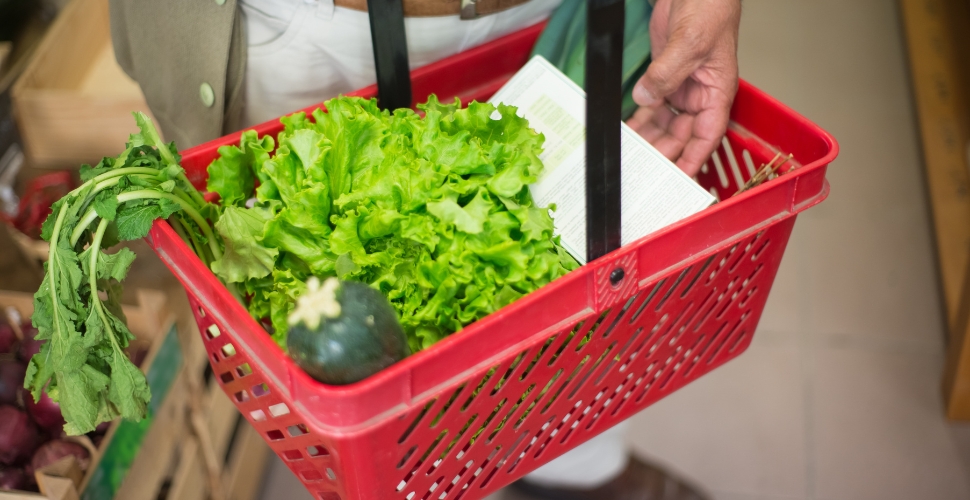
A Cyclospora outbreak linked to bagged salads has put fresh produce company Taylor Farms at the center of a food safety scandal in the US. But the parasite isn’t the only thing hiding in their supply chain. As attention turned to the company, reports linking it to Arizona’s prison labor system resurfaced, exposing another issue behind the food supply: the exploitation of incarcerated workers.
The real cost of a cheap salad
A 2023 investigation found that Taylor Farms contracted labor through Arizona Correctional Industries, the state’s for-profit prison labor program. The company reportedly paid about $4.75 an hour to the correctional system, while incarcerated workers saw no more than $1.50 of it.
Taylor Farms is one of the largest fresh produce companies in the US. And they’re not alone. Hickman’s Egg Farms, NatureSweet, and Televerde had the same arrangement through Arizona Correctional Industries.
The findings grow more troubling from there.
Futurism reports:
“Worse yet, some of those incarcerated workers may have been here as non-citizens—meaning it would be illegal to employ them in the same low-wage jobs if they weren’t being held in detention. As Prison Legal noted at the time, at least 26 prisoners employed by these companies had been detained by ICE, meaning that outside of incarceration, hiring them would have been illegal. To put it bluntly: their status as prisoners was the only thing that made the arrangement legal.”
The Arizona Department of Correction, Rehabilitation, and Reentry (DCRR) said it had hired out 15,700 “Mexican nationals” between 2008 and 2023, although it could not say how many were undocumented immigrants.
Slavery is still legal in America
Arizona isn’t the only state where this happens. At Arkansas’s Cummins Unit, incarcerated men described being forced to work on prison farms without pay while armed guards on horseback supervised them. Those who refused to work were placed in solitary confinement; those bitten by snakes were given ibuprofen and sent back to the fields.
The 13th amendment of the US Constitution supposedly abolished slavery in 1865, but it left one exception. The amendment allows slavery and involuntary servitude as punishment for a crime. As a result, states can require incarcerated people to work, often for pennies an hour.
Prison work is not always forced labor. However, under the International Labour Organization’s definition, it become forced labor when authorities coerce workers, including by punishing them for refusing to work. Failing to provide wages and protections comparable to those of workers outside prison is also an indicator of forced labor.
The US has spent recent months using forced labor investigations and tariffs to pressure trading partners. At the same time, some have argued that the US should meet the same standards at home, pointing out America’s forced prison labor system.
Several states have already outlawed slavery, with no exceptions, from their constitutions, but most states have not. The Freedom United community alongside our partners in the End the Exception movement continue to call on American lawmakers to remove it from the 13th Amendment.
The outbreak will pass. The system that made those bags of lettuce so cheap won’t—not as long as the 13th Amendment allows it. No one should be exploited because they are incarcerated. Join the call to remove the 13th Amendment’s exception clause and end prison slavery today.


Freedom United is interested in hearing from our community and welcomes relevant, informed comments, advice, and insights that advance the conversation around our campaigns and advocacy. We value inclusivity and respect within our community. To be approved, your comments should be civil.
A few things we do not tolerate: comments that promote discrimination, prejudice, racism, or xenophobia, as well as personal attacks or profanity. We screen submissions in order to create a space where the entire Freedom United community feels safe to express and exchange thoughtful opinions.