


The Uyghur Region produces over 20% of the world’s cotton. What does this mean for the U.S.? It means that 1 in 5 cotton products in an average American household contains fibers harvested with forced labor. MeiLin Wan, vice president of Textile Sales for Applied DNA Sciences, highlighted this statistic on a podcast by the National Council of Textile Organizations (NCTO), reported MSN. A study from February 2023 to March 2024 found that 19% of cotton products, including socks, fabrics, garments, and home textiles, contained Uyghur region cotton, revealing the widespread nature of the issue.
The de minimis loophole
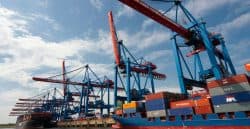
Despite U.S. government efforts to prevent the entry of cotton products originating from China’s Uyghur region, a significant amount of these products continues to reach American consumers. Wan believes that is due to a loophole in the de minimis provision which allows shipments valued under $800 to enter the U.S. duty free and without customs inspections as long as they are addressed to individuals.
She warns:
“I would point to the de minimis loophole as something that needs to be addressed as soon as possible,”…”The fact that the millions of goods that come in per day under de minimis are not subject to duties, and secondly, not checked, is harmful to the industry as a whole, harmful to all the businesses, and harmful to American consumers.”
In addition, Wan stressed that simply changing the country of origin for purchases does not guarantee clean cotton, as research has found Uyghur region cotton in products from several countries, including Vietnam, Cambodia, and Bangladesh.
Keeping brands honest
Applied DNA Sciences specializes in textile traceability solutions, such as isotope and PCR DNA testing, which help identify the origin and farming methods of cotton used in textile products. Genetic tagging technology, which has advanced in recent years, is being used more frequently to trace cotton supply chains and identify forced labor violations. Brands can now apply DNA tags at different stages of the supply chain to verify that their cotton meets specific standards, such as being organic or certified by a third party. This increased traceability helps protect brands, supply chains, and consumers by providing proof of ethical sourcing practices.
U.S. lawmakers are also considering numerous bills to reduce China’s influence in the American market, including measures to limit Chinese access to tax credits, restrict farmland purchases, and address security concerns like election interference and drone surveillance. However, Emily Kilcrease from the Center for a New American Security believes that isolating China could have unintended consequences, particularly in technology sectors, such as green energy, where China plays a critical manufacturing role.
Kilcrease cautions:
“China is a leading producer of these technologies, and there’s this lack of clarity on how we think about de-risking alongside-and potentially in tension with-other goals, like the climate transition,”… “That’s a big, tangled knot that we haven’t totally figured out how to unweave here yet.”
The Chinese government claims that the camps in the Uyghur region, where they produce cotton, are voluntary ‘vocational training centers’ that provide professional opportunities and eliminate extremism. However, we have repeatedly found evidence that exposes this system for what it is — modern slavery. Let’s take advantage of this momentum and use our voice as a civil society to effect real change.

Freedom United is interested in hearing from our community and welcomes relevant, informed comments, advice, and insights that advance the conversation around our campaigns and advocacy. We value inclusivity and respect within our community. To be approved, your comments should be civil.
I suppose that the Chinese handling of the religious, political and social tensions in the Uyghur region is a work in progress and that it is, to a certain degree, influenced by foreign reactions. Where can we find credible Chinese information sources about developments in the Uyghur region?