


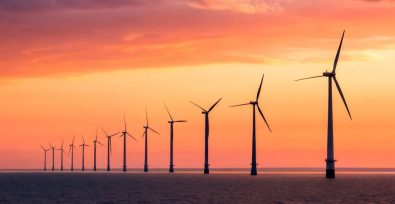
Taiwan’s offshore wind industry has expanded rapidly. A decade ago, it barely existed. Today, it is the largest offshore wind market in Asia outside China. And global renewable energy companies are deeply involved as well as governments across Europe and Asia. However, as turbines rise along Taiwan’s west coast, migrant workers say the clean energy boom is coming at a personal cost. A cost that has all the earmarks of modern slavery.
Withheld wages and coercive practices
Building offshore wind farms from scratch takes major investment and a fleet of workers. But migrant workers employed in Taiwan by major global renewable energy suppliers report paying thousands of dollars in recruitment fees to get the job. Many borrowed heavily. As a result, they began their jobs already in debt.
One Vietnamese worker interviewed by The Diplomat described the burden:
I borrowed everything to pay the recruiter’s $5,300 fee. My family had no savings. Now that I repay the money in installments, I also pay interest.
Workers said fees ranged from $5,000 to $6,000, years of earnings in Vietnam. Several said they were forced to sign paperwork that understated what they had actually paid. Importantly, recruitment fees are prohibited under international labor standards. Supposedly offshore wind developers and export credit agencies require recruiters to follow a zero-fee policy. Yet workers say the practice continues.
Many workers said their wages were placed into restricted “savings” accounts. And the accounts were not accessible to them until they finished their contracts. Held passports, fines, warning letters, or threats of deportation for mistakes on the production floor were also commonly reported.
Father Peter Nguyen Van Hung, who has long supported migrant workers in Taiwan, explained the imbalance:
When employers say that migrant workers voluntarily agree to certain practices, it is important to recognize that workers rarely feel they have a genuine choice because their legal status, livelihood, and daily survival depend heavily on the employer’s mercy.
Advocates stress that because workers’ visas, housing, and legal status are tied to their employers, they lack real bargaining power. That means agreements labeled “voluntary” may not reflect genuine consent.
Wind boom faces labor rights test
Significantly, offshore wind projects in Taiwan rely on billions of dollars in guarantees from export credit agencies in Denmark, Norway, Belgium, Canada, Japan, and other countries. After the allegations of labor exploitation emerged, Denmark’s export credit agency, EIFO, initiated a formal review. Officials visited Taiwan and acknowledged potential labor rights concerns. Norway and Belgium also indicated they would take action.
EIFO said:
…together with our partners and other export credit agencies (we will) explore options to initiate a joint, extended labor rights audit of relevant suppliers.
Discussions are now underway about joint labor audits across suppliers. Meanwhile, Taiwan’s Ministry of Economic Affairs has also pledged support. It said experts would assist suppliers in reviewing recruitment and employment practices. Ultimately, Taiwan’s offshore wind sector stands at a crossroads as do many clean energy initiatives. The global transition to renewable energy is urgent. However, the transition to clean energy must not be built on the backs of exploited workers. For migrant workers who arrive seeking opportunity, the winds of change should power freedom from modern slavery, not just clean energy. And it’s not just wind farms, solar panels and electric cars are also coming at a human cost.
Add your voice and demand climate justice without the high price of modern slavery. Because the just transition to the climate emergency should advance anti-modern slavery efforts, not put more in exploitation.




Freedom United is interested in hearing from our community and welcomes relevant, informed comments, advice, and insights that advance the conversation around our campaigns and advocacy. We value inclusivity and respect within our community. To be approved, your comments should be civil.
This is a sobering look at the ‘hidden’ human cost of the green transition. It’s easy to support offshore wind as a conceptual win for the environment, but as the article points out, we can’t ignore the labor exploitation happening in the supply chain. It reminds me of the due diligence we’re currently doing for a home renovation in New York; we’ve spent weeks vetting contractors specifically to ensure they use fair labor practices and ethical sourcing.