


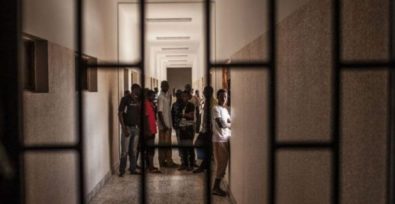
A survivor rescued in the central Mediterranean has described repeated interception, detention, and extortion in Libya under European Union–funded migration control. His experience shows how EU cooperation with Libyan authorities repeatedly returns migrants to trafficking, forced labor, and ransom systems.
Interceptions that return people to Libya’s detention system
An 18-year-old Egyptian, referred to as Omar, reached safety in late November after the humanitarian vessel Humanity 1 rescued him at sea. The rescue marked his seventh attempt to cross the Mediterranean in 2025. On four occasions, the Libyan coastguard intercepted his boat. Tunisian authorities stopped the vessel and handed those onboard to Libyan authorities. Each interception ended with Omar’s detention in Libya.
Libyan authorities imprisoned Omar until his family paid a ransom for his release. Demands ranged from 2,000 to 16,000 Libyan dinars. When his relatives struggled to pay, guards beat detainees, withheld food, and prolonged detention.
Omar described extreme overcrowding and routine violence. At Bir al-Ghanam, an unofficial detention site south-west of Tripoli, guards packed hundreds of people into cells with no room to sit. Guards entered the cells at all hours to beat detainees. The US State Department has flagged the site for arbitrarily detaining migrant children.
Forced labor imposed when ransoms can’t be paid
When families failed to secure release payments, detention shifted into forced labor. Guards forced detainees to work under threat of violence as a substitute for ransom, while women faced sexual abuse.
openDemocracy reports,
“I was held in a [Libyan] detention centre for a year and a half. I was forced to do hard labour because I couldn’t pay the ransom,” said Salahadine Juma, a co-founder of Refugees in Libya. He added that when detainees cannot pay, “they force them to work. Or, if they are women, they are sexually abused.”
Juma said his organization receives between 50 and 80 messages a day from refugees and migrants trapped in detention centers, many describing the same cycle of extortion, forced labor, and abuse.
A 2023 UN fact-finding mission found “overwhelming evidence” that migrants in Libya are systematically tortured and subjected to enslavement, sexual violence, and enforced disappearance while in detention.
EU funding exploitation
Despite this record, the EU has spent hundreds of millions of euros supporting Libyan migration control. Italy has led this effort, supplying patrol vessels and other resources to the Libyan coastguard after ending its own state-led search-and-rescue operation in 2014. Since then, more than 22,000 people have died or gone missing on the central Mediterranean route.
Omar described close ties between smugglers, police, militias, and coastguard officials. He said bribes often determined whether authorities intercepted boats or allowed them to pass. “The Libyan coastguard are border guards for Italy, not for Libya. They get paid bribes by the smugglers, and they get their salaries from Europe.”
EU cooperation with Libya continues to expose migrants to these risks. Ending trafficking on this route requires cutting ties with Libyan authorities responsible for detention and abuse, and replacing interception with safe pathways and genuine search and rescue.
Stand with the Freedom United community and call on the EU to end cooperation with Libya’s abusive detention system. It’s past time the EU stop funding policies that return people to trafficking and forced labor.




Freedom United is interested in hearing from our community and welcomes relevant, informed comments, advice, and insights that advance the conversation around our campaigns and advocacy. We value inclusivity and respect within our community. To be approved, your comments should be civil.