


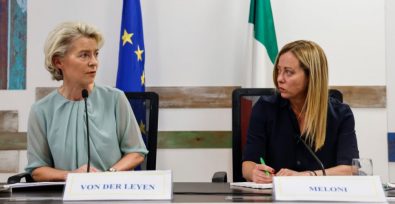
The European Commission has unveiled a new five-year migration policy that prioritizes deterrence, deportations, and cooperation with non-EU countries. Officials frame the plan as urgent and necessary, even though irregular arrivals fell sharply last year. However, rights groups warn that Europe’s reliance on external enforcement systems expose migrants to trafficking and exploitation.
“Europe decides who comes to Europe”
The Commission presented the plan amid sustained political pressure to appear tough on migration. EU leaders insist they need stronger measures, even though irregular arrivals dropped by more than 25% in 2025.
At the center of the policy is a blunt message: “Europe decides who comes to the EU.” In practice, the emphasis falls on prevention, faster removals, and stricter controls.
DW reports,
“The priority is clear: bringing illegal arrival numbers down and keeping them down,” said EU migration commissioner Magnus Brunner.
“Abuse gives migration a bad name — it undermines public trust and ultimately takes away from our ability to provide protection and undercuts our drive to attract talent,” Brunner said.
In its strategy statement, the European Commission said that “fast, effective and dignified return is indispensable to the well-functioning and the credibility of our migration and asylum system.”
This selective openness shapes the policy’s logic. Meaning, migrants are filtered by economic value. As enforcement expands, access to protection for the most vulnerable risks shrinking in practice.
Prioritizing returns and ‘return hubs’
A major focus of the strategy is increasing deportations. Since only about one quarter of people ordered to leave the EU actually return to their countries, the Commission proposes third country “return hubs.” In practice, these facilities would hold rejected asylum seekers before deportation, potentially throughout the duration of their asylum process.
The Commission plans to punish countries that refuse cooperation. Existing and planned deals include Tunisia, Mauritania, Egypt, and Morocco.
Meanwhile, Amnesty International warns that the EU risks complicity in rights violations by depending on “third countries.”
In the face of escalating abuse and violence, EU doubles down
This strategy deepens a system the EU already relies on. For years, Europe has outsourced migration control to Libya. Researchers and human rights groups have well documented the results, and they are far from “dignified.”
Authorities intercept migrants at sea and return them to detention centers where abuse is routine. People are beaten, extorted, and forced to work.
Some never even make it to Libya. The Libyan Coast Guards might attack their boats, and many drown. Or be thrown overboard during interceptions. Mass graves linked to migrant abuses are uncovered in Libya every year.
EU funding and cooperation keep this system running. The Commission’s new strategy does not change course. It expands returns and doubles down on externalized enforcement.
Freedom United is calling on the EU to end cooperation that fuels trafficking and forced labor in Libya. Migration control cannot rely on abuse and exploitation. Support our campaign demanding that European leaders stop outsourcing violence and start protecting people from modern slavery.




Freedom United is interested in hearing from our community and welcomes relevant, informed comments, advice, and insights that advance the conversation around our campaigns and advocacy. We value inclusivity and respect within our community. To be approved, your comments should be civil.
If the migrants would integrate, work, respect women and girls i would agree. But the evidence is sadly that too many from Islamic countries do not. Sorry