


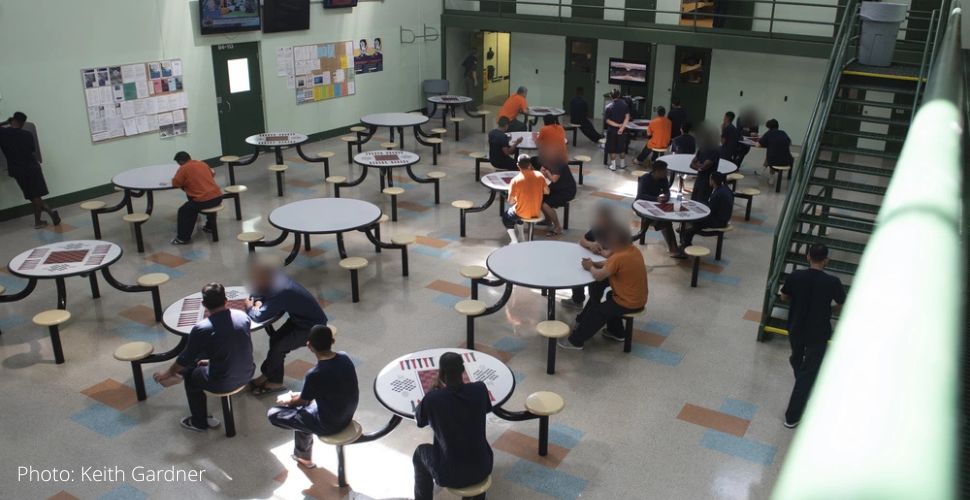
Former immigrant detainees have reached a settlement in their decade-long forced labor class action against US Immigration and Customs Enforcement (ICE) contractor, GEO Group. Their case alleged that the company forced them to work for $1 a day, or nothing at all, under threat of solitary confinement.
The company spent years dodging trial by appealing every major procedural ruling to the highest federal courts. The case could only proceed to trial after the US Supreme Court unanimously rejected GEO Group’s final immunity defense early this year. Just as a jury was due to hear the case, GEO Group announced they would settle. Neither side has disclosed the terms, and a judge must still approve the deal. The case challenged how private companies running detention centers for ICE use the labor of the people they hold.
Forced to work for $1 a day or nothing at all
Between 2004 and 2014, GEO held the class members at the Denver Contract Detention Facility in Aurora, Colorado, which it runs under a contract with ICE. Alejandro Menocal, a former detainee, brought the case in 2014 on behalf of himself and others held there. In his lawsuit, he described the range of work detainees did to keep the facility running.
Courthouse News reports:
“According to Menocal, the detention center used detainees to clean toilets in the medical facility, strip and wax floors, and do laundry. In addition to preparing and serving meals for other detainees, Menocal says detainees also cooked for staff at GEO-sponsored events. In addition, detainees prepared clothing for new arrivals, provided barber services and did clerical work.”
GEO claims that it followed requirements from ICE and Congress, which directed contractors to operate a voluntary program paying no less than $1 a day. However, Menocal alleged that some work went entirely unpaid and that detainees who refused assignments risked solitary confinement and so could not be voluntary.
Menocal estimates that at least 300 former detainees are owed more than $5 million in unpaid wages.
A decade of legal action against GEO Group
In his complaint, Menocal wrote:
“GEO’s pay policies violate principles of justice, equity, and good conscience. GEO was unjustly enriched when it paid its employees $1 per day, or nothing at all, for their labor.”
The company said it simply asked detainees to clean up after themselves and described solitary confinement as discipline necessary to maintain safety and order.
GEO also claimed qualified immunity from the lawsuit as a government contractor. Both the trial judge and the 10th Circuit rejected that argument. The case then reached the US Supreme Court, which declined to review it in February, leaving the lawsuit on course for trial.
According to Georgetown Law research cited by The American Prospect, about half of people in ICE detention work inside the facilities that hold them, doing jobs that companies would otherwise pay staff to do. Meanwhile, GEO’s annual revenue grew from $1.52 billion when the lawsuit was filed to more than $2 billion today.
Detainees still speaking out
In a separate protest earlier this year, detainees at Delaney Hall, a GEO-run facility in Newark, New Jersey, refused food and work over detention conditions and the use of detainee labor. They reported cleaning bathrooms and serving meals for as little as $1 a day. Those who refused work reported threats of transfer, isolation and lost privileges. Two days after the strike began, ICE moved its organizer to another facility.
Across the country, detainees have launched hunger strikes at detention centres. Meanwhile, the federal office responsible for independently investigating complaints about detention conditions has been shut down.
Join us in calling on GEO Group to end forced labor in their detention facilities! Sign the petition.





Freedom United is interested in hearing from our community and welcomes relevant, informed comments, advice, and insights that advance the conversation around our campaigns and advocacy. We value inclusivity and respect within our community. To be approved, your comments should be civil.
A few things we do not tolerate: comments that promote discrimination, prejudice, racism, or xenophobia, as well as personal attacks or profanity. We screen submissions in order to create a space where the entire Freedom United community feels safe to express and exchange thoughtful opinions.