


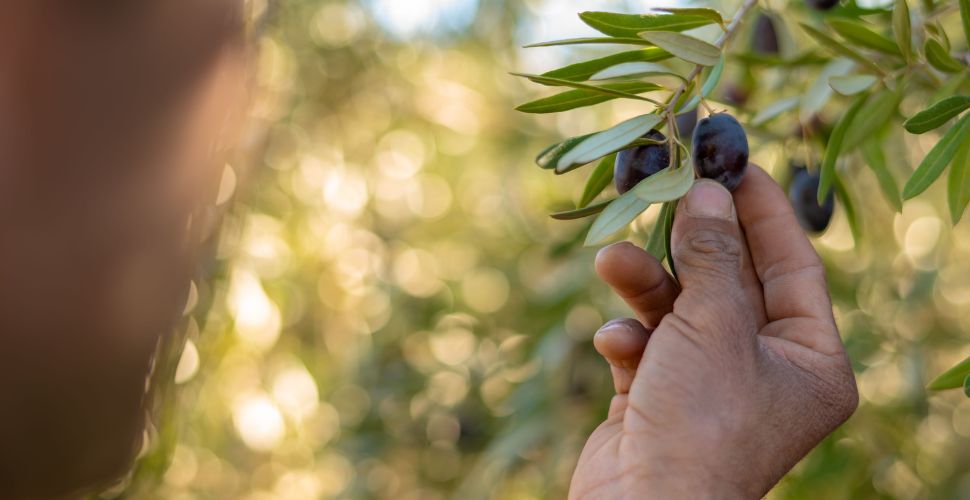
Migrant agricultural workers in Sicily have taken matters into their own hands by forming Dokulaa, a self-managed farming cooperative. The initiative aims to help workers escape caporalato, an abusive system of labor recruitment that remains widespread in the region’s agricultural sector—and considered a form of modern slavery.
‘No Italian would agree to work in these conditions’
Caporalato involves informal labor intermediaries, known as caporali, who illegally recruit and manage agricultural workers. Workers, even those documented, have reported facing very low wages, excessive working hours, and abusive living and working conditions.
Legal experts in the region warn that undocumented workers are particularly at risk, describing them as “lured here to become slaves to the caporalato.” These conditions persist partly because undocumented workers have little recourse and risk deportation if they come forward.
Saikou Ceesay, now the vice-president of Dokulaa, risked his life crossing the sea to find work.
InfoMigrants reports:
“Saikou, who is undocumented, sometimes worked up to 18 consecutive hours. ‘No Italian would agree to work in these conditions,’ he asserts. Especially since, for equivalent work, foreigners are paid less: the young Gambian earns a mere 20 euros a day before returning to the squat he uses, for lack of permanent housing, to get in a bare few hours of sleep.”
About a quarter of Italy’s agricultural workforce is foreign, with an estimated 200,000 workers undocumented. Italy made caporalato a criminal offence in 2016, but weak enforcement and the precarious legal status of many agricultural workers have allowed the practice to continue.
Dokulaa offers a different model. Members carry out harvesting and land maintenance, storing crops and olive oil in a converted former classroom. Pooling the produce ensures fair redistribution of profits to those who harvested it, without workers being cheated by intermediaries.
Italy takes a step towards tackling forced labor
The system has affected migrant workers across Italy. In 2024, Italian authorities rescued 33 Indian farm workers from severe exploitation on farms in northern Italy. The workers were promised decent jobs and paid for seasonal work permits, but instead were exploited. The unscrupulous employers confiscated their passports, trapped them in debt, and forced them to work long hours for minimal pay.
Father Salvatore, who oversees a community kitchen which provides meals to migrant farm workers in the Paternò region says, “politicians are taking political advantage of the situation,”
Worker-led cooperatives like Dokulaa provide a much-needed alternative to existing exploitative systems, but they cannot replace the need for legal frameworks that protect all agricultural workers from modern slavery.
In June 2026, Italy ratified the 2014 Protocol to Convention No. 29, becoming the 65th ILO member state to do so. The Protocol requires governments to prevent forced labor, protect those subjected to it, and hold perpetrators accountable. It will enter into force in Italy on June 9, 2027.
Has your country implemented ILO convention 29?
Italy’s ratification is significant, but with the majority of countries yet to follow suit, millions of agricultural workers worldwide remain without these protections.
Sign Freedom United’s petition calling on governments to ratify and implement Convention 29, and help close the legal gaps that allow systems like caporalato to persist.


Freedom United is interested in hearing from our community and welcomes relevant, informed comments, advice, and insights that advance the conversation around our campaigns and advocacy. We value inclusivity and respect within our community. To be approved, your comments should be civil.
A few things we do not tolerate: comments that promote discrimination, prejudice, racism, or xenophobia, as well as personal attacks or profanity. We screen submissions in order to create a space where the entire Freedom United community feels safe to express and exchange thoughtful opinions.