


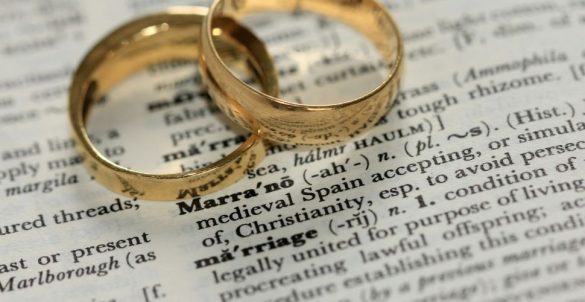
The United Nations General Assembly has adopted a resolution establishing November 27 as the International Day to End Child, Early and Forced Marriage. The UN has set a goal of ending the practice by 2030.
Since 2021, several countries, including Sierra Leone, England, the Philippines, the Dominican Republic and Bolivia have moved to set the marriage age at 18 with no exceptions. But in the US, more than two dozen states still allow marriage under 18. However, a new federal bill setting a nationwide minimum marriage age of 18 could change this.
A global reckoning
The UN estimates that 12 million girls become child brides every year. Children married before 18 risk facing abuse, domestic servitude and a profound loss of autonomy. Since minors often cannot file for divorce, they feel powerless to leave their marriage safely.
Bhuwan Ribhu, a lawyer and founder of a children’s rights nonprofit is one of the key figures behind the UN resolution.
Ribhu told NPR,
“Establishing an official International Day to End Child, Early and Forced Marriage gives us an annual platform to hold governments accountable and enforce laws that protect children.”
Sierra Leone’s 2024 law set 18 as the minimum with no exceptions for parental consent, religious marriage or pregnancy. The country also penalizes anyone who facilitates a child marriage. Colombia also banned the practice outright in 2024, after roughly 23% of the country’s girls had been married before turning 18. Bolivia followed in 2025, removing provisions that let 16- and 17-year-olds marry with parental or judicial approval.
However, Indian advocates warn that bans are just a first step. In India, child marriage has been illegal for years. However, UNICEF estimates that at least 1.5 million girls are married there annually.
“Our parents just hold the weddings in secret,” a 16-year-old told NPR. “At night—very rushed.” Another girl said she didn’t even understand what was happening when she was married. She was 9.
Indian advocates say that parents, religious leaders and others must support the ban for it to be effective.
US needs to “get house in order”
Introduced recently by lawmakers, the Child Marriage Prevention Act would push every state toward a national minimum marriage age of 18.
Its cosponsors point to data showing more than 314,000 minors were legally married across the US between 2000 and 2021, most of them girls married to adult men. Casey Carter Swegman of the Tahirih Justice Center, a key partner on the bill, argues the US needs to “get our house in order” before it can credibly push other countries to act.
Not everyone is satisfied with the bill as written. Fraidy Reiss, founder of Unchained At Last, supports its financial incentives for states that ban child marriage outright. However, she says two provisions undercut its title. One would fund states to study child marriage rather than ban it. And another would let minors as young as 16 qualify for a US spousal visa—the same exception raised over an earlier version of the bill.
California is closer than ever
There’s movement at the state level too. California, one of 3 American states with no minimum marriage age at all, is closer than it’s ever been: a bill setting the age at 18 passed the legislature in August and now awaits the governor’s signature, after years of failed attempts.
California is on the verge of ending child marriage, but most of the US isn’t. Sign the petition calling on US lawmakers to end child marriage nationwide, without exception.





Freedom United is interested in hearing from our community and welcomes relevant, informed comments, advice, and insights that advance the conversation around our campaigns and advocacy. We value inclusivity and respect within our community. To be approved, your comments should be civil.
A few things we do not tolerate: comments that promote discrimination, prejudice, racism, or xenophobia, as well as personal attacks or profanity. We screen submissions in order to create a space where the entire Freedom United community feels safe to express and exchange thoughtful opinions.