


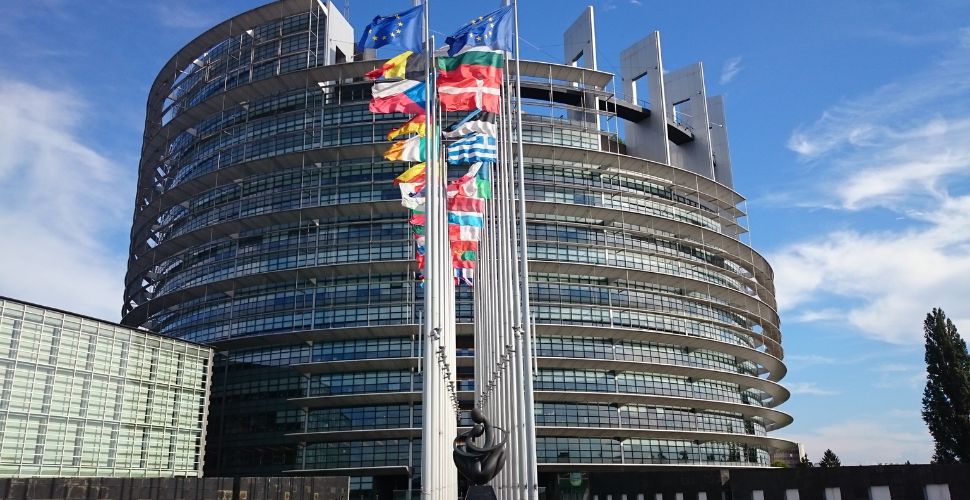
Five European Union (EU) states are in active dialogue with Rwanda to establish offshore centers for rejected asylum seekers. The conversations mark the most concrete step yet in the EU’s push to outsource migration control beyond its borders.
Critics warn that a similar now disbanded scheme with the UK would have failed modern slavery victims. Weaknesses in identifying survivors and governments’ prioritization of offshoring, means survivors would be sent offshore rather than accessing the support they need to recover. In addition, their vulnerability puts them at greater risk of re-trafficking.
A plan that has already failed
Representatives from Germany, Austria, Denmark, Greece, and the Netherlands—known in Brussels as the “group of five”—visited Rwanda last week to discuss establishing so-called “return hubs” for people whose asylum claims have been denied. The visit follows the European Parliament’s passage in June of a new Return Regulation, described as the bloc’s strictest-ever migration law, which allows member states to transfer rejected asylum seekers to third countries—even where the person has no prior connection to that country.
But the plan carries a striking precedent. In 2022, the UK struck a similar deal with Rwanda under then-prime minister Boris Johnson. Only four people were removed under the UK’s Rwanda scheme before it was abandoned. Meanwhile, it cost taxpayers hundreds of millions of dollars.
“The scheme became a defining—and deeply contested—feature of UK asylum policy. The UK Supreme Court ruled in November 2023 that Rwanda could not be considered “safe,” citing the risk of persecution or ill-treatment for transferred asylum seekers.”
The court ruled that Rwanda could send people back to the countries they had fled, exposing them to torture and abuse. Critics also flagged that the UK scheme offered no exemption for modern slavery survivors, leaving victims of trafficking and exploitation exposed to further harm.
Many survivors arrive via irregular routes out of dire necessity—fleeing violence, exploitation, or persecution. Rather than providing safe routes and support on arrival, deportation to a third country further endangers them and puts them at risk of being re-trafficked. The UN has made clear that failing to offer protections to trafficking victims violates international standards.
Outsourcing migration and accountability
Presently, Europe’s existing model of outsourcing migration control to Libya has produced documented catastrophe. EU funding trains and equips the Libyan coast guard to intercept migrants at sea and return them to detention centers. Torture, sexual violence, starvation, ransom, and forced labor are routine in these centers.
“Return hubs” carry the same structural risk. Once a person is transferred to a third country, the EU’s removal process is legally complete. What happens next—detention conditions, access to legal help, status—is governed primarily by the bilateral agreement and the host country’s own laws.
And under the new regulation, transfers may only be made to countries where “international human rights standards and principles in accordance with international law, including the principle of non-refoulement, are respected.” But rights groups say that is precisely where the plan is most exposed. One advocate describes the countries under consideration as “characterized by human rights violations.” In addition to Rwanda, Uganda, Kenya, and Ghana have also been named as possible locations.
Strategy or political cover?
The push for “return hubs” is also being driven by a new problematic law. The EU’s Crisis and Force Majeure Regulation essentially frames certain countries as deliberately sending migrants to destabilize the EU. Critics say this anti-migrant rhetoric is being used as political cover to suspend fundamental rights, including access to asylum. Meanwhile, irregular arrivals fell sharply last year.
The group of five aim to have at least one partnership signed by the end of 2026.
Sending migrants to countries with poor human rights records will not deter irregular arrivals. It will only move vulnerable people closer to harm. Freedom United is calling on EU governments to scrap policies that expose migrants to modern slavery, and to invest instead in safe, rights-based migration pathways. Take action today.





Freedom United is interested in hearing from our community and welcomes relevant, informed comments, advice, and insights that advance the conversation around our campaigns and advocacy. We value inclusivity and respect within our community. To be approved, your comments should be civil.
A few things we do not tolerate: comments that promote discrimination, prejudice, racism, or xenophobia, as well as personal attacks or profanity. We screen submissions in order to create a space where the entire Freedom United community feels safe to express and exchange thoughtful opinions.