


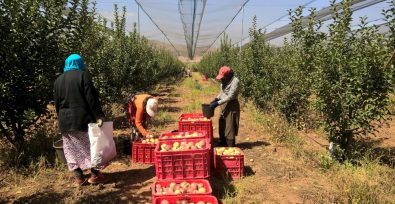
Every year, thousands of migrant workers travel to the UK to harvest fruit and vegetables under the Seasonal Worker visa scheme. Many arrive already in debt after paying up to £5,000 in recruitment fees, visas and travel costs.
Advocates warn that this debt—combined with visas that tie workers to a single employer—creates conditions that enable exploitation and, in some cases, trafficking. Yet despite years of warnings, the government has rejected key reforms designed to prevent abuse.
Debt and dependency fuel abuse
In July 2024, the Migration Advisory Committee (MAC) published a detailed review of the visa scheme. It recommended guaranteeing at least two months’ pay to prevent workers from falling into debt, alongside higher wages and stronger enforcement to curb exploitation.
Research cited in the review found that some migrant workers described being treated “like slaves” by supervisors. Others reported threats of deportation or blacklisting when they raised concerns. One woman said colleagues sexually threatened her, and managers told her it would be easier to dismiss her than address the abuse.
Eleanor Lyons, the independent anti-slavery commissioner, said too many workers face exploitation while feeling unable to speak out because both their job and immigration status depend on a single recruiter. In an article by The Bureau of Investigative Journalism, Lyons urged:
The government must tackle these gaps decisively and ensure that workers’ and survivors’ voices are at the heart of its approach. Without these safeguards, harm will continue where it could and should be prevented.
When workers are tied to one employer, burdened by debt and fearful of deportation, their vulnerability deepens. These are the very conditions that can enable forced labor and trafficking.
“A callous lack of care”
The government endorsed the “employer pays principle,” which would shift recruitment costs from workers to employers, but stopped short of mandating it in the horticulture sector. Instead, it pointed to the forthcoming Fair Work Agency (FWA), which will merge existing enforcement bodies. But critics question whether the agency will be adequately resourced. The UK already has only a quarter of the labor inspectors recommended by the International Labour Organisation.
The MAC also recommended stronger inspection powers, improved data collection and better coordination between agencies in “seasonal worker welfare.” Those specific measures did not appear in the government’s response. Chris Law MP, the Scottish National Party’s business spokesperson, says removing the power imbalance between employers and workers should have been a priority for a government that has claimed to support workers’ rights. He said:
Their failure to act upon these recommendations and instead choose to follow the policy of the previous Conservative government demonstrates a callous lack of care and compassion for vulnerable workers.
Jamila Duncan-Bosu of the Anti-Trafficking and Labour Exploitation Unit said the government had an opportunity to protect vulnerable workers but chose “a path that prioritizes administrative convenience over human dignity.”
Meanwhile, despite numerous calls for reform to the visa scheme—originally introduced as a pilot—it has been extended until at least 2030. And legal challenges are growing. One migrant worker has brought a claim alleging they were trafficked under the scheme.
Workers who feed the country deserve protection
Migrant farmworkers are essential to Britain’s food system. Yet without guaranteed pay, independent mobility between employers, and strong enforcement, exploitation remains embedded in the structure of the scheme.
When abuse persists year after year—despite official reviews, warnings and evidence—it signals more than oversight. It signals blatant systemic failure.
Sign the petition urging all governments to ensure that migration systems do not trap workers in debt and dependency. Strong safeguards, real enforcement and the right to change employers are critical to preventing forced labor and trafficking.
Workers who feed the country deserve protection—not policies that leave them exposed.





Freedom United is interested in hearing from our community and welcomes relevant, informed comments, advice, and insights that advance the conversation around our campaigns and advocacy. We value inclusivity and respect within our community. To be approved, your comments should be civil.