


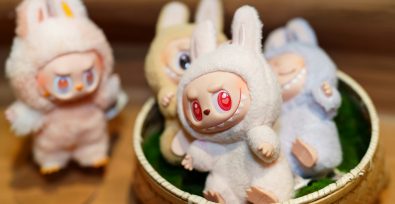
A labor rights investigation has raised serious concerns about the exploitative working conditions inside the supply chain of Labubu toys, a global pop culture phenomenon produced by the Chinese company Pop Mart.
The popularity of Labubu toys grew rapidly in 2025. In the first half of the year, Pop Mart’s “Monsters” line generated 4.8bn yuan (£511m) in sales, with production scaling up to meet global demand. But China Labor Watch (CLW) found that this growth has translated into “pressure borne directly by workers.”
What’s really behind the Labubu boom
As demand for the furry figurines surged worldwide, workers at a factory in China’s Jiangxi province paid the price. Workers say they faced excessive overtime, unsafe conditions, and a lack of basic labor protections.
CLW, a New York–based NGO, investigated Shunjia Toys, one of Pop Mart’s suppliers, over three months in 2025. Researchers interviewed more than 50 workers, including three aged under 18, all of whom were producing Labubu toys exclusively. The investigation found evidence of exploitative working conditions that violate both Chinese labor law and international standards.
According to CLW, the factory routinely required workers to sign blank labor contracts. Workers were told to enter only personal details, while key terms such as wages, job duties, and social insurance were left empty and unexplained. CLW said:
Workers were given no more than five minutes to complete the process and were told explicitly not to read or fill in other sections,
The investigation also found that 16- and 17-year-old workers were assigned to standard assembly line roles without the special protections required for young workers under Chinese law. These workers reportedly carried the same workload and production targets as adults. The report also said the underage workers mostly did not understand their contracts or their legal status when asked.
As demands soar, so does exploitation
Workers told investigators they were expected to meet unrealistic daily production targets. Teams of 25 to 30 people required to assemble at least 4,000 toys per day. Chinese law limits overtime to 36 hours per month, yet CLW found that workers often exceeded 100 hours of overtime monthly.
Although Shunjia Toys officially reports a production capacity of 12 million toys per year, interviews suggested actual output may be far higher. CLW’s executive director said this gap is common in China’s manufacturing sector when demand spikes, leaving workers to absorb the pressure through longer hours and heavier workloads.
Shunjia Toys accounts for a small portion of Labubus’s total output, which Pop Mart reported as approximately 30 million units per month last year. The company also works with various manufacturers in China, Southeast Asia, and recently Mexico to meet rising demand.
When oversight fails, modern slavery thrives
Pop Mart said it takes worker welfare seriously and conducts regular audits of its suppliers. The company stated it is investigating the allegations and will require corrective action if violations are confirmed.
However, CLW says that Pop Mart is not doing enough to protect its workers. Existing supply chain oversight mechanisms are failing to detect and prevent labor abuses effectively. Li Qiang, the executive director of CLW says:
If Pop Mart is serious about reducing labor risks in the Labubu supply chain, it should establish accessible grievance and communication mechanisms for workers (such as an independent and effective worker hotline), improve transparency around actual factory working conditions, and disclose its supply chain structure, including outsourced production, to enable meaningful oversight.
The findings highlight a broader challenge facing companies as they expand into global markets: growth without accountability leaves workers vulnerable to exploitative work conditions—and even modern slavery. If corporations cannot guarantee safe and lawful employment, they have no business scaling production or profits. Workers’ lives, rights, and dignity must come before growth. That’s why we advocate for corporate accountability and demand that people are put before profit, no exception.





Freedom United is interested in hearing from our community and welcomes relevant, informed comments, advice, and insights that advance the conversation around our campaigns and advocacy. We value inclusivity and respect within our community. To be approved, your comments should be civil.